Canadian Rockies Road Trip — Our Van Life Route from Whistler to Kelowna
This article was written ahead of our September 2026 trip. We’ll update it with first-hand experience, photos, and trail reports when we’re back in October.
This article contains affiliate links. If you book or purchase through these links I may earn a small commission at no extra cost to you. I only recommend products and companies I genuinely use or have researched thoroughly.
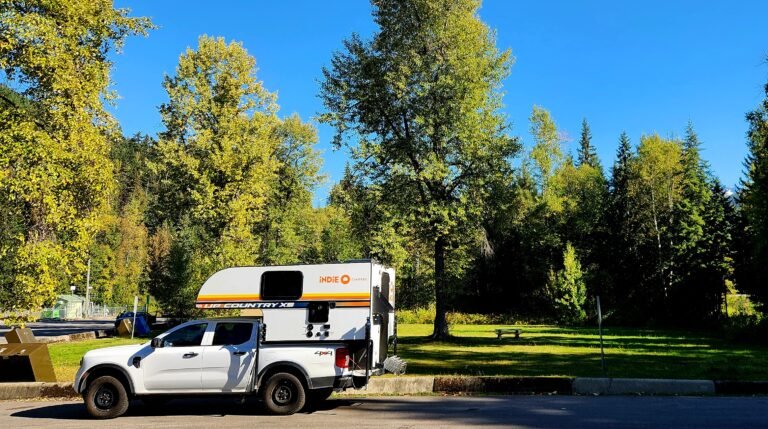
Most people fly into Vancouver and head straight to Banff. We’re doing it differently — picking up a campervan from Indie Campers in Vancouver for atwo and a half week Canadian Rockies road trip that will take us north through Whistler, east through the national parks to Jasper, south down the Icefields Parkway to Banff and Yoho, then west through Revelstoke and into the Okanagan Valley.
Around 2,500km. Six stops through some of the world’s most dramatic mountain landscape. And a deliberate choice to do it this way rather than flying because the Canadian Rockies sit at 1,500–3,500 metres above sea level — and we’re heading to 5,364 metres in Nepal six weeks later.
This is the route we took, why we chose each stop, and what you need to know if you’re planning something similar.
Why a Campervan
The question we get most often is why a campervan rather than hotels and a rental car.
The honest answer is flexibility. A road trip of this length across this many locations involves a lot of check-ins and check-outs, a lot of hauling bags in and out of vehicles, and a lot of decisions about where to eat breakfast. A campervan removes most of that friction — you sleep where you park, your kitchen travels with you, and the route can flex without a hotel cancellation fee hanging over every decision.
We booked through Indie Campers who have a strong fleet and straightforward pickup process at Vancouver Airport. The van is your home for the duration — it rewards a bit of organisation but the trade-off in flexibility is worth it for a trip of this scope.
The Route — Overview
Vancouver → Whistler → Sun Peaks → Clearwater → Jasper → Lake Louise → Banff → Yoho (Kicking Horse) → Mt Revelstoke → Kelowna → Vancouver
Travelling north via Whistler to Jasper, then down the Icefields Parkway to Banff, west toward Golden, and through Kelowna and the Okanagan Valley before returning to Vancouver is one of the most complete and scenic Canadian Rockies road trips you can do — combining mountain highways, national parks, alpine lakes, and vineyard-lined valley drives in a single loop.
The key insight about this route: it’s not just about the big national parks. Whistler, Sun Peaks, Clearwater, and Revelstoke are the stops that most standard Banff/Jasper itineraries skip. Including them adds days and kilometres but changes the character of the whole trip — you’re not just ticking two famous parks, you’re moving through a genuinely varied landscape.
Stop 1 — Whistler (2 nights)
Where we’re staying: Parkbridge Riverside Resort — north of the village on the river
Drive from Vancouver: 150km north on the Sea to Sky Highway, approximately 2 hours.
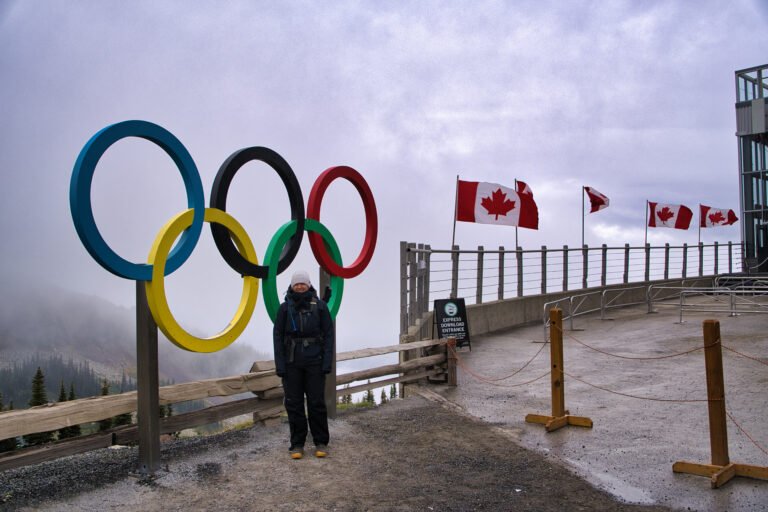
Whistler is best known as a ski resort — host of the 2010 Winter Olympics — but in September it’s a mountain biking and hiking destination with the crowds of peak summer behind it. The valley sits at roughly 700m, but the mountains surrounding it push well above 2,000m.
The Sea to Sky Gondola along the way offers incredible bird’s-eye views of Howe Sound, with access to several interpretive walking trails, viewing platforms, and an on-site restaurant — worth the stop on the drive up from Vancouver.
In Whistler itself, the Peak 2 Peak Gondola connecting Whistler Mountain and Blackcomb Mountain is a worthwhile half-day. The hiking trails above the gondola stations get you above 2,000m without significant effort — useful for legs that need reintroducing to altitude after months at sea level in Auckland.
Stop 2 — Sun Peaks (1 night)
Where we’re staying: Lakeside Heffley Retreat
Drive from Whistler: approximately 350km northeast, around 4–5 hours via Kamloops.
Sun Peaks is a smaller, quieter version of Whistler — a resort village at 1,255m in the Thompson Okanagan region. It’s not a major tourist destination in the way Whistler or Banff are, which is part of the appeal. A night here is a genuine rest stop between the coastal mountains and the interior highlands, with hiking directly from the village.
The drive through Kamloops gives you your first sight of the BC interior — the landscape dries out dramatically as you leave the coast behind, and the Kamloops area feels genuinely different from the rainforest environment of the Sea to Sky corridor.
Stop 3 — Clearwater (2 nights)
Where we’re staying: Spahats Creek Resort
Drive from Sun Peaks: 130km north, approximately 2 hours.
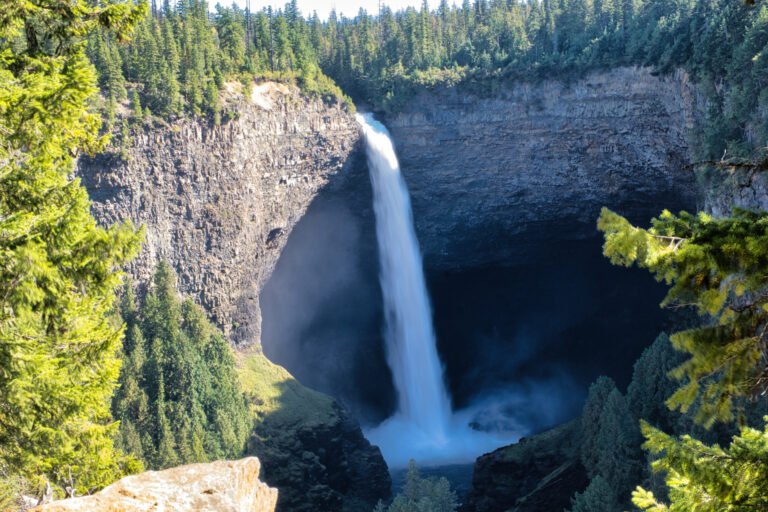
Clearwater is the gateway to Wells Gray Provincial Park — one of BC’s most undervisited and genuinely spectacular parks. Helmcken Falls, at 141m, are higher than Niagara and see a fraction of the visitors. Trophy Mountain offers high alpine meadows at 2,000m+ that in September are transitioning from late summer wildflowers to early autumn colour.
This is the stop most Rockies road trips skip entirely, which makes it one of the most intriguing on the itinerary. The altitude training logic applies here too — Wells Gray’s highland trails push well above 1,500m and the terrain is legitimately demanding.
Stop 4 — Jasper (3 nights)
Where we’re staying: Whistlers Campground, Jasper National Park
Drive from Clearwater: 320km east, approximately 4 hours.
Jasper is the northern gateway to the Canadian Rockies and offers dramatic scenery, wildlife viewing opportunities, and a quieter mountain-town feel than its more famous southern neighbour. The national park is Canada’s largest Rocky Mountain park.
Altitude context: Jasper town sits at 1,060m. The surrounding peaks push to 3,500m+. The high-altitude day hikes here could be genuinely valuable for EBC preparation — we’re hoping to get above 2,000m on at least two of our three days.
What we’re thinking about at Jasper:
Athabasca Falls — one of Canada’s most powerful waterfalls, a short drive from town. The gorge geology is extraordinary — the river has cut through quartzite bedrock in a way that feels almost impossibly dramatic for how accessible the viewpoint is.
Maligne Lake and Spirit Island — Jasper’s most famous lake is also the largest natural lake in the Rockies. The boat cruise to Spirit Island is the classic experience. September timing means the summer crowds have thinned considerably.
Skyline Trail day hike — one of the most celebrated day hikes in the Canadian Rockies, traversing an open ridge above the treeline with panoramic views of the surrounding peaks. At 2,400m+ for much of the route, this would be the most significant altitude day of the Rockies section — genuinely useful EBC preparation if we can fit it in.
Whistlers Campground is the largest in the Canadian Rockies, well-positioned for both the town and the main trailheads.
Stop 5 — Lake Louise (2 nights)
Where we’re staying: Baker Creek by Basecamp, Bow Valley Parkway
Drive from Jasper: 220km south on the Icefields Parkway — allow a full day.
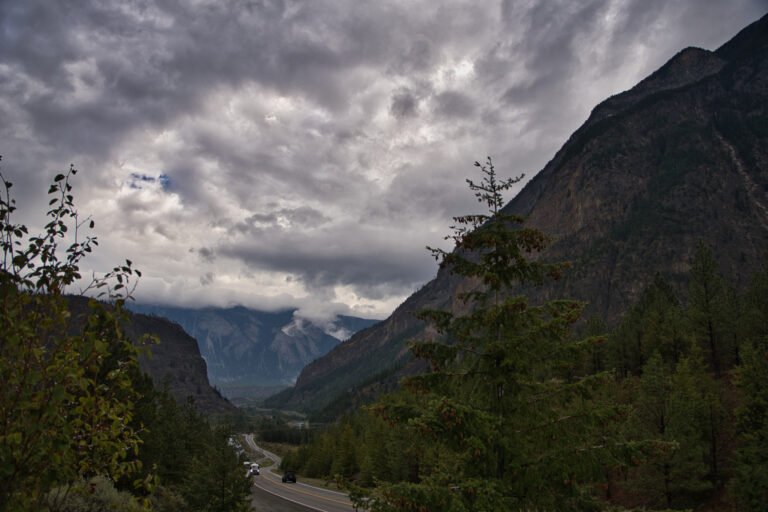
The Icefields Parkway is the centrepiece of the entire road trip. Driving south on this stretch is one of the most scenic drives in the Canadian Rockies — this section alone can easily take a full day with scenic viewpoints and short walks.
Key stops along the Parkway:
Columbia Icefield and Athabasca Glacier — one of the largest icefields south of the Arctic Circle. The glacier walk experience gets you onto the ice itself — a rare opportunity to walk on a feature that’s been forming for thousands of years and is visibly retreating year by year.
Peyto Lake viewpoint — the turquoise lake photographed from above is one of the most reproduced images in Canadian tourism. The viewpoint walk from the Bow Summit parking area is short and well worth the detour.
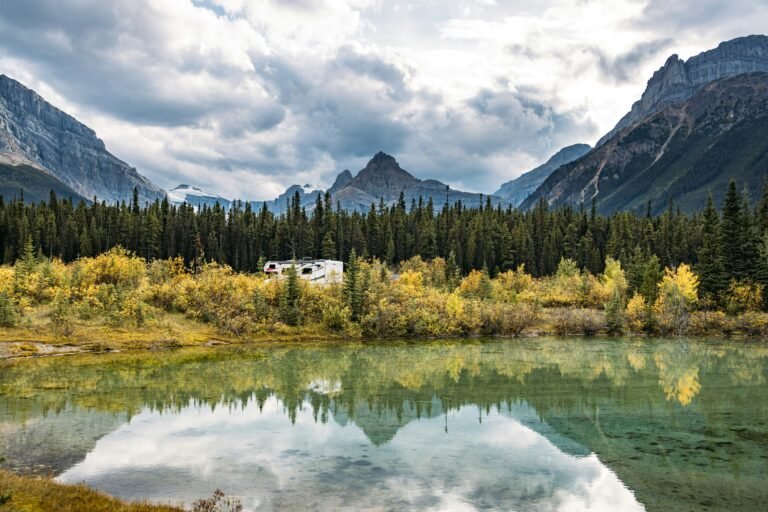
Bow Lake — quieter than Peyto, and arguably more beautiful at ground level. The reflection of the surrounding peaks in the still water on a calm morning is something you want a camera for.
Lake Louise itself has the imposing Victoria Glacier as a dramatic backdrop feeding its mineral-rich glacial waters. The classic lakeside walk is genuinely beautiful — the teahouse at the far end of the lake is a worthwhile stop. For the altitude training angle, the Plain of Six Glaciers hike above the lake gains 370m and reaches 2,100m — legs and lungs should notice the difference.
Baker Creek by Basecamp is a well-regarded property along the Bow Valley Parkway, between Lake Louise and Banff, in a quieter stretch of the national park corridor.
Stop 6 — Banff (3 nights)
Where we’re staying: Tunnel Mountain Village 2 Campground, Banff National Park
Drive from Lake Louise: 60km south, approximately 45 minutes.
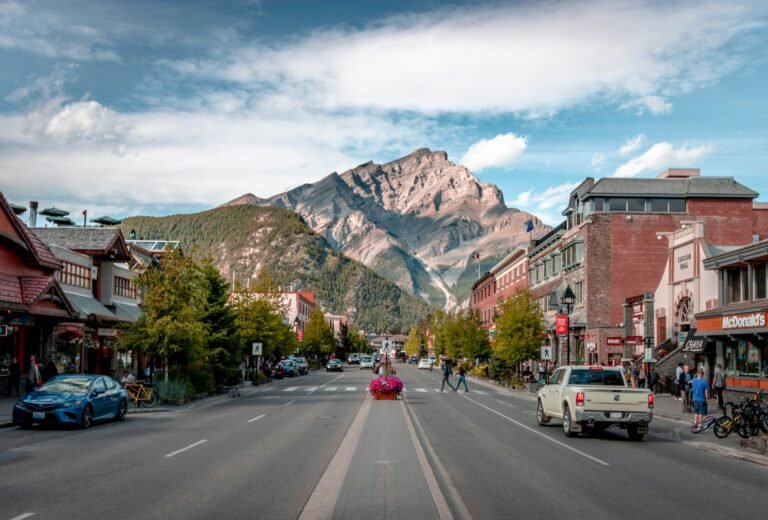
Banff National Park is the most visited park in the Canadian Rockies — and for good reason. The town of Banff at 1,383m is a proper mountain town rather than a service village — good restaurants, an actual high street, and enough to do that three nights doesn’t feel like padding.
What we’re thinking about at Banff:
Sulphur Mountain Gondola — the summit sits at 2,281m, offering sweeping views of the surrounding ranges. A quick route to significant altitude without a full day hike — useful on an acclimatisation day when you want altitude exposure without heavy exertion.
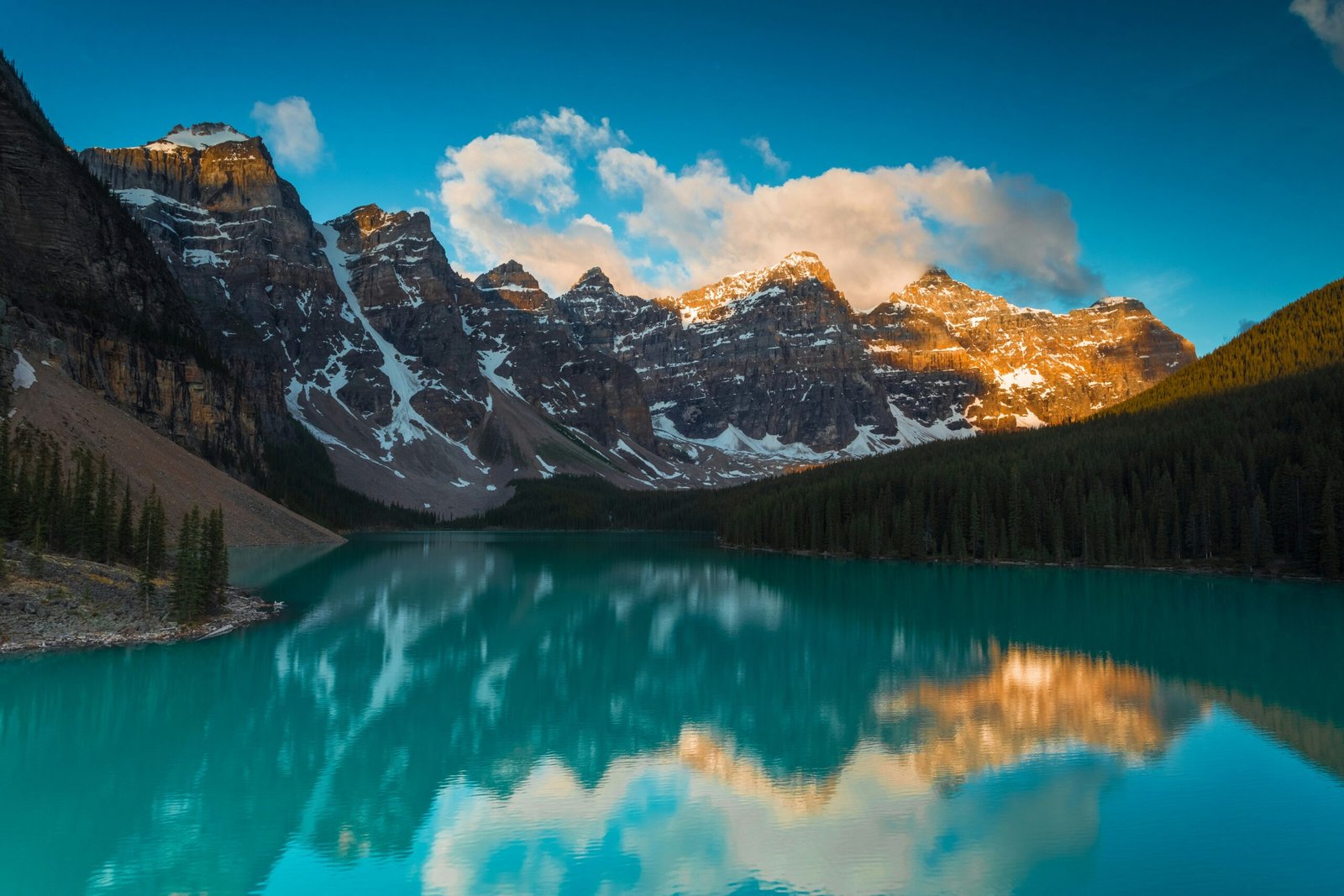
Moraine Lake — on any mental list of most beautiful places on the planet, Moraine Lake sits somewhere in the top five. The colour of the water is just extraordinary. Access is restricted in peak season but September may give more flexibility. The Rockpile Trail provides the classic elevated view in under 30 minutes.
Johnston Canyon — lower than most Banff hikes at around 1,400m, but the canyon walk to the upper falls is genuinely dramatic and the iron catwalk sections make it feel more adventurous than a standard trail.
Larch Valley — September is larch season in the Canadian Rockies. The trees turn brilliant yellow in late September, and Larch Valley above Moraine Lake is one of the best places to see it. The hike gains 570m and reaches 2,350m — high on our list for one of our three days here.
Tunnel Mountain Village 2 is inside the national park, a short drive to Banff town, and one of the most popular campsites in Canada.
Stop 7 — Yoho National Park / Kicking Horse (2 nights)
Where we’re staying: Kicking Horse Campground, Yoho National Park
Drive from Banff: 90km west, approximately 1 hour.
Yoho is Banff’s quieter neighbour across the BC border — smaller, less visited, and containing some of the most spectacular scenery in the Rockies corridor. The name “Yoho” is a Cree word expressing wonder and awe, which is about right.
Emerald Lake is the headline attraction — the impossibly green colour comes from the same glacial flour that colours Lake Louise and Peyto Lake, but the setting feels more intimate. The lake circuit walk takes around two hours.
Takakkaw Falls is one of Canada’s highest waterfalls at 254m — accessible by a short walk from the road and genuinely spectacular.
Stop 8 — Mt Revelstoke (1 night)
Where we’re staying: Snowforest Campground, Mt Revelstoke National Park
Drive from Yoho: 200km west, approximately 2.5 hours.
Revelstoke is a mountain town with a genuinely outdoorsy local culture and a much lower tourist volume than the national park corridor. The Summit Road up Mt Revelstoke National Park reaches 1,938m by road — from there, trails push above 2,000m into genuine alpine terrain.
The Eva Lake trail from the Summit Road is a classic — 12km return, mostly above treeline, with views back toward the Selkirk Mountains. After three weeks of hiking across the Rockies, our legs will either be in excellent shape or quietly suffering. We’ll find out.
Stop 9 — Kelowna and the Okanagan Valley (2 nights)
Where we’re staying: Bear Creek Provincial Park, Okanagan Lake
Drive from Revelstoke: 200km south, approximately 2.5 hours.
The landscape shift from Revelstoke to Kelowna is one of the most dramatic on the entire route. Within two hours the dense mountain forest gives way to a semi-arid valley landscape of vineyard rows, fruit orchards, and Okanagan Lake stretching north to south as far as you can see.
The Okanagan Valley is Canada’s wine region — we’re doing the Metropolis Wine Tour on our second day, a full afternoon through the valley’s key wineries. After five weeks of moving every day or two, a wine tour feels like an appropriate gear change before flying east to Quebec.
The Kettle Valley Trail along the old railway corridor above Kelowna is worth a morning — the views over the lake and valley at around 1,200m are outstanding and the trail is flat enough to give tired legs a gentler day.
Bear Creek Provincial Park sits on the western shore of Okanagan Lake — one of the better campsites in BC for the combination of location and facilities.
The EBC Altitude Angle
We planned this route partly for the pleasure of it and partly because the Canadian Rockies sit between 1,000m and 3,500m above sea level — consistent altitude exposure that gives the body meaningful acclimatisation without the risk profile of serious high altitude.
The progression matters: from Vancouver at sea level, through Whistler at 700m, Jasper at 1,060m, Lake Louise at 1,730m, and Banff at 1,383m, with day hikes pushing above 2,000m and 2,300m on multiple days. Three weeks of this provides real physiological benefit — more red blood cells, improved oxygen efficiency, and an understanding of how our bodies respond to altitude before we’re standing at 4,000m in Nepal with limited options.
It’s not a substitute for the acclimatisation schedule built into the Evertrek itinerary. But it’s a meaningful head start.
Practical Notes
Parks Canada Pass: Required for entry into the national parks (Jasper, Banff, Yoho). An annual Discovery Pass covering multiple parks is significantly better value if you’re spending more than a few days in the system — check current pricing at Parks Canada.
Campsite booking: Parks Canada campsites book out early — Tunnel Mountain Village II and Whistlers Campground both require advance booking through the Parks Canada reservation system. We booked months in advance.
September timing: We’re there in mid-September — crowds have dropped from the August peak, larch trees are beginning to turn in the higher elevations, and the weather is generally settled but cooler. Bring layers. Mornings in the national parks in September are cold.
Indie Campers: Pickup at Vancouver Airport, drop-off at the same location before flying east to Quebec. The online booking process is straightforward and the van is a practical, well-equipped setup for a trip of this scope.
More From Above the Cloud Treks
- How to Train for Everest Base Camp
- Altitude Sickness on the EBC Trek
- EBC Trek Guide for Non-Mountaineers
- Kepler Track — New Zealand Great Walk Guide
- Combining Bhutan and EBC in One Trip
Andrew Dillon is a data consultant, runner, and triathlete based in Auckland, New Zealand. He is trekking EBC via Gokyo with Evertrek in October 2026. Follow his journey at abovethecloudtreks.com.