Munro Bagging in Scotland — How the Hills Prepared Me for Everest
This article contains affiliate links. If you book or purchase through these links I may earn a small commission at no extra cost to you. I only recommend products and companies I genuinely use or have researched thoroughly.
In October 2026, I’ll fly from Edinburgh to Kathmandu. From there, a 4am drive to Ramechhap, a 20-minute flight to Lukla, and then 18 days of trekking to Everest Base Camp and back.
The thread that connects Denny in Stirlingshire — where I grew up — to the Khumbu Valley in Nepal runs directly through the Scottish Highlands. Munro bagging from 2010 to 2013, with two friends who’ve been climbing hills with me since before any of us knew what we were doing. The mountains taught me things about pacing, weather, discomfort, and the satisfaction of earning a view that no gym or training plan ever could.
Here’s what Munro bagging is, how you get started, and why the Scottish hills remain the best preparation for bigger mountains anywhere in the world.
What Is a Munro?
A Munro is a Scottish mountain with an elevation of more than 3,000 feet (914 metres). The name comes from Sir Hugh Munro (1856–1919), whose groundbreaking list of the 283 highest mountains in Scotland was first published in the Scottish Mountaineering Club’s journal in 1891.
Today, the official list contains 282 peaks. The first person to become a completer — the term for someone who has bagged them all — was Reverend A.E. Robertson in 1901. Munro himself never completed his own list — he died in the 1918 flu epidemic with three peaks remaining.
Over 6,000 people have now completed all 282 Munros — known as Munroists or compleatists. The record for completing all of them is held by Jamie Aarons, who did it in just over 31 days by foot, bike, and kayak. Most people take considerably longer — years, sometimes decades. That’s rather the point.
There’s no technical climbing involved — Munros are for walkers, not climbers. But don’t let that fool you. Scotland’s weather, the remoteness of many peaks, and the navigation challenges involved make Munro bagging a genuinely serious hillwalking challenge. The hills demand respect.
The Jelly Baby Tradition
We started bagging Munros around 2010. We were based in central Scotland — I grew up in Denny near Stirling, studied at Stirling University — and the Highlands were a few hours’ drive away on weekends when work allowed.
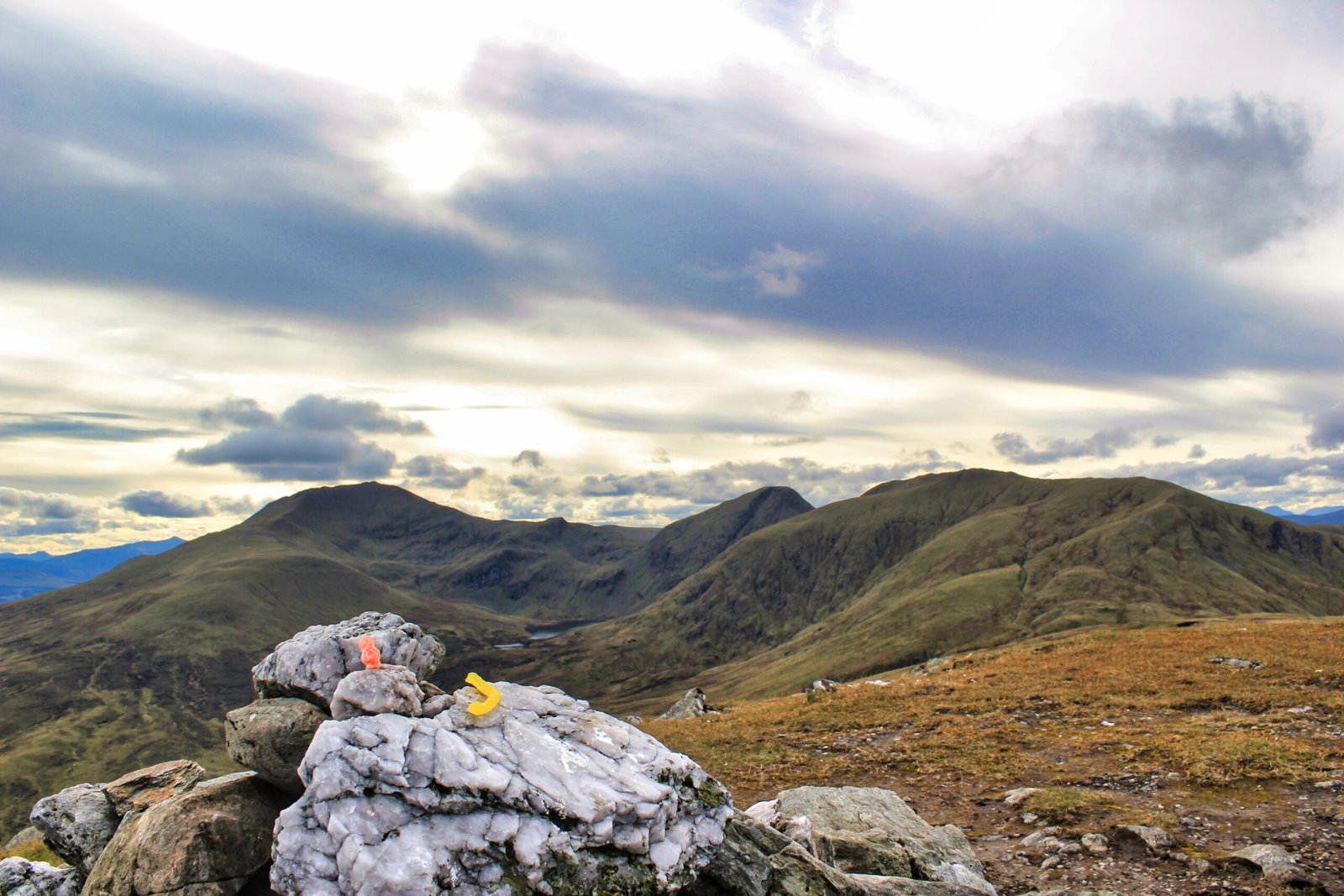
The summit tradition was jelly babies. Or snakes — the longer, chewier version that some people prefer. One at the top, always. It sounds trivial. It isn’t — the summit ritual marks the moment, gives you a reason to pause rather than immediately heading back down, and creates a shared language across all the hills. Every summit has the same ending. It makes the bad ones as memorable as the good ones.
By the time I left for New Zealand in 2013, we’d bagged a meaningful number — not enough to be close to completing, but enough to have developed a real feel for the Scottish hills and what they demand. The cloud inversion from the Lawers range, the terrain on Schiehallion that would be perfect for escaping a zombie apocalypse, and the inevitable bog that appears as if from nowhere. These are landscapes that stay with you.
In October 2026 we stop in Scotland for a week before flying to Kathmandu. If the weather allows we will try for at least one Munro. There will be jelly babies and snakes at the summit. Full circle.
What Munro Bagging Taught Me About Mountain Thinking
Three things specifically that translate directly to EBC.
Pace is everything. The Scottish hills teach you to walk slowly — not because the terrain demands it at low altitude, but because if you go out too hard in the first hour you’ll pay for it in the fourth. The instinct to stride out at the start is strong. Learning to suppress it is foundational. This is even more critical at 4,500 metres, where going too fast has consequences beyond tired legs.
Weather changes the game completely. A Munro in sunshine and a Munro in winter wind and rain are genuinely different experiences. On the Kepler Track in April — which grew out of the same hill walking background — we walked straight into 50km/h winds and -10°C wind chill on day two. The mountain did what mountains do. You prepare for it, you adapt, you keep moving. This is the mindset EBC requires above Namche, and especially on the Cho La Pass crossing.
The view is earned, not guaranteed. Some of the summits I remember most clearly were in complete cloud — no view at all, just the trig point and the wind and the jelly baby. You learn not to need the view to justify the day. What you get from the climb is the climb itself. This is particularly relevant for the harder days on EBC, when altitude means slow progress and conditions might not cooperate.
Getting Started With Munro Bagging
For anyone reading this who wants to try it — here’s the honest practical guide.
Where to start:
Some Munros are accessible for confident beginners, but most require a good level of fitness, basic navigation skills, and experience of walking in changeable mountain conditions.
Good beginner Munros — well-marked paths, manageable conditions, accessible from central Scotland:
- Ben Lomond (974m) — the most southerly Munro, a well-defined path, easy access from Loch Lomond and the Central Belt. The classic first Munro for good reason.
- Schiehallion (1,083m) — a straightforward ridge walk with panoramic views, good path all the way. And yes, the terrain really does look like it was designed for outrunning the undead.
- Ben Vorlich (985m, near Loch Earn) — a satisfying climb with a proper summit feel, not too remote.
What you need:
Waterproof jacket and trousers, warm layers, good boots with ankle support, a map and compass (and the ability to use them — don’t rely solely on your phone), plenty of water, snacks, and a full weather check before you go.
Scotland’s weather is famously changeable. What’s clear at the trailhead can be cloud, wind, and horizontal rain at the summit. This isn’t a reason not to go — it’s a reason to be prepared.
How to track your progress:
Walkhighlands.co.uk is the definitive resource — full route guides for every Munro, user reports on current conditions, and the ability to track your list as you go. It’s the Strava of Scottish hillwalking.
The social side:
Munro bagging is both a solo pursuit and a deeply social one. The Scottish Mountaineering Club maintains the official list. The Munro Society is open to those who have completed all 282. Most people do it with friends, over years, building a shared map of hills visited and weather endured.
The jelly baby summit tradition is ours. You’ll develop your own.
From 914 Metres to 5,364 Metres
The Munros top out at Ben Nevis at 1,345m. EBC sits at 5,364m. These are not comparable altitudes — the Highlands are not altitude training, and I’m not claiming otherwise.
What they are is foundational. The habit of sustained uphill effort, the acceptance of bad weather, the patience required on a long day out, the satisfaction of a summit earned in difficult conditions — these are mental and physical skills that transfer to any mountain, anywhere in the world.
Scotland gave me the mountains. Nepal will test what I’ve learned from them.
More From Above the Cloud Treks
- EBC Trek Mental Preparation
- How to Train for Everest Base Camp
- Kepler Track — New Zealand Great Walk Guide
- How Difficult is the EBC Trek?
- EBC Trek Guide for Non-Mountaineers
Andrew Dillon is a data consultant, runner, and triathlete based in Auckland, New Zealand. He grew up in Denny near Stirling and bagged Munros across the Scottish Highlands from 2010 to 2013. He is trekking EBC via Gokyo with Evertrek in October 2026. Follow his journey at abovethecloudtreks.com.