Eastern Canada Cities — Our Guide to Quebec, Montreal, Ottawa, Toronto and Niagara
This article was written ahead of our October 2026 trip. We’ll update it with first-hand experience when we’re back.
This article contains affiliate links. If you book or purchase through these links I may earn a small commission at no extra cost to you. I only recommend products and companies I genuinely use or have researched thoroughly.
After two and a half weeks in the Canadian Rockies, we drop the campervan in Vancouver and fly east to Quebec City — the beginning of a 12-night Eastern Canada leg that takes us through some of the most culturally distinct cities in North America before we fly out through Reykjavik to Edinburgh.
Eastern Canada is not the Rockies. It’s cities, history, language, food, and the particular quality of somewhere that has been doing things its own way for four centuries. Here’s what we’re planning for each stop — with the hotels we’ve booked and the things we’re most looking forward to.
Quebec City — 3 nights + 1 night return
Where we’re staying: Monsieur Jean Hotel Particulier, Quebec City
Quebec City is the oldest walled city in North America and the only one north of Mexico — a UNESCO World Heritage Site where the street signs are in French, the architecture is unmistakably European, and the St Lawrence River provides a backdrop that most cities would trade significant history for.
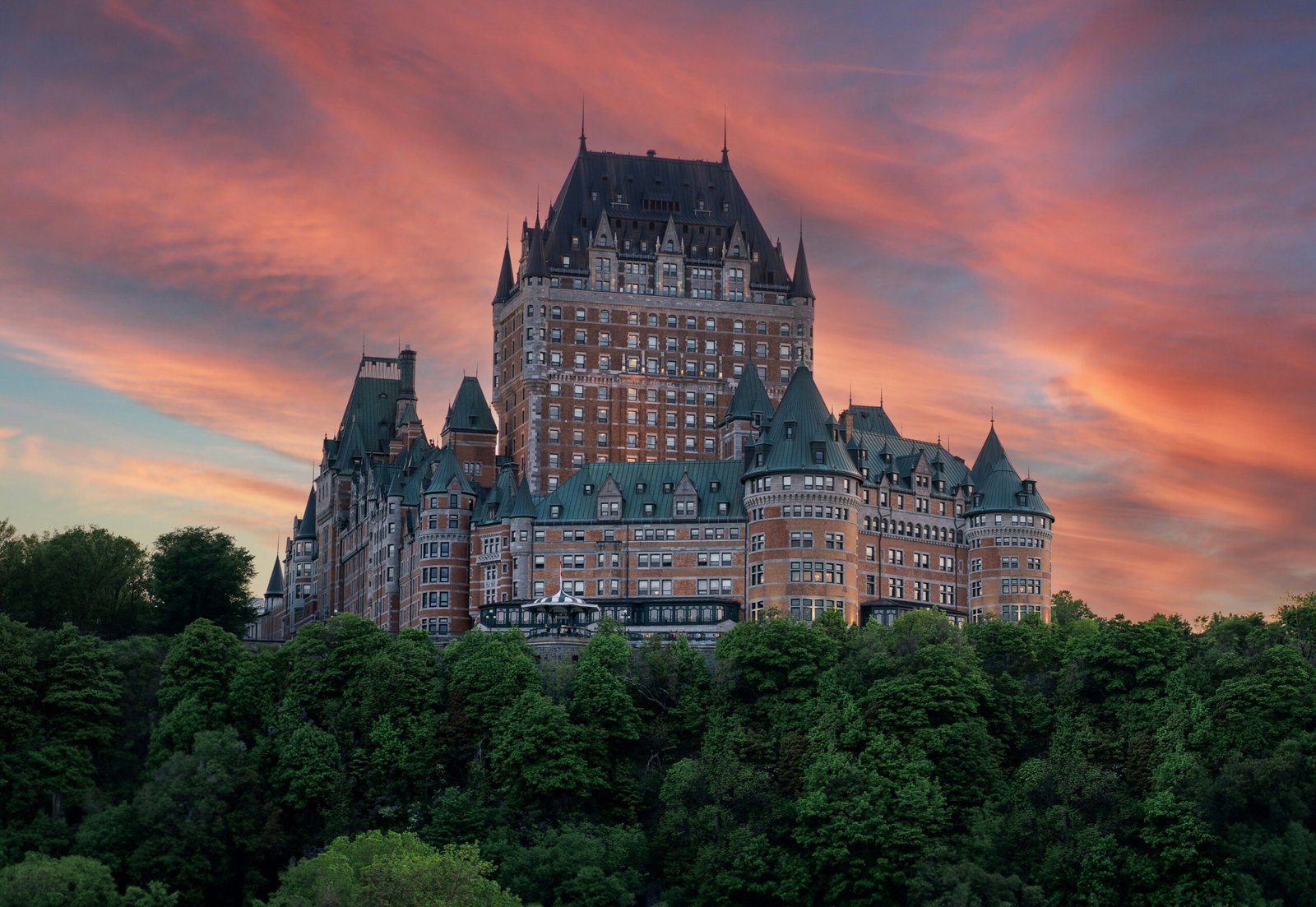
Old Quebec divides into Upper Town (Haute-Ville) and Lower Town (Basse-Ville). The Château Frontenac dominates the skyline from Upper Town — one of the most photographed hotels in the world, sitting on the clifftop above the river. Dufferin Terrace runs along the clifftop below it, with views across the St Lawrence.
Lower Town’s Place Royale is the historic heart of French Canada — one of the highlights is Notre-Dame-des-Victoires, the oldest stone church in North America, built between 1687–1723. The cobbled streets and period architecture around Place Royale are genuinely impressive rather than merely tourist-facing.
We’re doing an overnight to Tadoussac for whale watching (covered below) and returning to Monsieur Jean for a final night before driving to Montreal. The hotel itself is a boutique property in Old Quebec — our kind of accommodation after weeks of campervans and national park facilities.
Don’t miss: The morning light on Dufferin Terrace before the crowds arrive. The Plains of Abraham — site of the 1759 battle that shaped Canadian history. And the food — Quebec City takes its French Canadian cuisine seriously.
Tadoussac — 1 night
Where we’re staying: Maison Hovington
A detour from Quebec City, roughly 200km northeast along the St Lawrence. We’re hiring an Avis car from Quebec, doing the whale watching tour, staying overnight, and returning the following morning.
Tadoussac sits at the confluence of the Saguenay and St Lawrence rivers — one of the best places in the world to see whales from shore, including blue whales, fin whales, and beluga. The whale watching tour from Baie St Catherine operates just across the Saguenay from Tadoussac — we’ve booked a 1pm departure.
Maison Hovington is a heritage property right on the waterfront — the kind of accommodation that makes a one-night detour feel worthwhile rather than rushed.
Montreal — 3 nights
Where we’re staying: Bresoles Hotel, Old Montreal
Montreal is the most culturally layered city on the Eastern Canada itinerary — a place where French and English Canada negotiate the same streets, where the food scene is genuinely world-class, and where the underground city (30km of tunnels connecting shops, restaurants, and metro stations) reveals a city that has adapted brilliantly to its winters.
Mount Royal Park — designed by the same architect as New York’s Central Park — rewards the uphill walk with sweeping views of the city, particularly at sunset. The park sits in the middle of the city and feels like it belongs there.
Old Montreal along the waterfront is the historic district — cobblestone streets, 17th century architecture, and the Notre-Dame Basilica with its extraordinary blue interior. The AURA light show inside Notre-Dame is a popular evening option.
Montreal’s food scene is another highlight — don’t miss trying poutine or bagels from Fairmount Bagel. The city’s bagels — smaller, denser, and wood-fired — are a specific Montreal thing that people feel strongly about. We intend to form an opinion.
The Bresoles Hotel sits in Old Montreal — well-positioned for everything the neighbourhood offers.
Ottawa — 3 nights
Where we’re staying: Le Germain Hotel, Ottawa
Ottawa is the city most visitors underestimate. It’s the national capital, which means it has the national museums, Parliament Hill, and the official residences — but it wears all of this more lightly than you’d expect. It’s also a genuinely pleasant city to walk around.
Parliament Hill with its Peace Tower and Centennial Flame is the obvious starting point. The National War Memorial and the National Gallery of Canada — with its dramatic glass tower visible from across the river — are worth half a day each.
The Rideau Canal, a UNESCO World Heritage Site, runs through the city centre — a working canal in summer and the world’s largest naturally frozen skating rink in winter. We’re there in October so it’ll be the former, but the canal-side walk is excellent regardless of season.
The Canadian Museum of History sits just across the river in Gatineau, Quebec — a striking building by Douglas Cardinal with one of the most impressive Indigenous history collections in the world. Worth the short trip across the bridge.
Le Germain is Ottawa’s premium boutique hotel option — a deliberate splurge after the van life section of the trip.
Toronto — 2 nights
Where we’re staying: Nester Finn, Toronto
Canada’s largest city and the most cosmopolitan stop on the Eastern Canada leg. Toronto works well as a 48-hour city — enough to see the headline attractions without feeling like you’re rushing, and with Niagara as a separate overnight the following day, our time here is purely Toronto.
The CN Tower remains the obvious landmark — one of the tallest free-standing structures in the world, with a glass floor observation deck that earns its admission price. The surrounding waterfront and harbour islands are worth the ferry trip for the skyline view back at the city.
Kensington Market and Chinatown give you the multicultural Toronto that the tourist brochures describe but actually deliver on — genuinely varied food, independent shops, and the kind of neighbourhood energy that central Toronto’s financial district deliberately avoids.
The Hockey Hall of Fame is one for sports fans specifically but it’s worth knowing it exists — Canada’s relationship with hockey is something you understand better after visiting than before.
Niagara on the Lake — 1 night
Where we’re staying: Riverbend Inn, Niagara on the Lake
Rather than staying at Niagara Falls itself — which is exactly as commercial as you’d expect from one of the world’s most visited natural attractions — we’ve booked into Niagara on the Lake, the pretty heritage town 20km north at the mouth of the Niagara River on Lake Ontario.
Niagara Falls deserves its reputation. The mist from the Horseshoe Falls on the Canadian side is extraordinary up close — significantly more impressive than photographs suggest. We’re hiring an Avis car from Toronto for the overnight, giving us flexibility to explore both the falls and the town at our own pace.
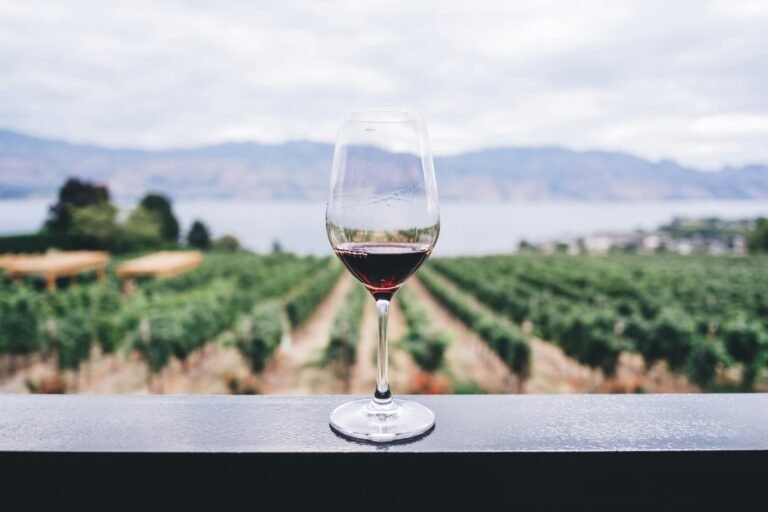
The Peller Estates winery tour is booked for the afternoon — wine has been a running theme across the trip, from Kelowna’s Okanagan Valley to now. The Niagara Peninsula produces particularly good ice wine and Chardonnay. We’ve completed a micro-credential in NZ wine and visited regions from Central Otago to Burgundy — the Niagara Peninsula is a genuine curiosity rather than an afterthought.
Riverbend Inn sits on the Niagara Parkway — a heritage property with vineyard views that makes Niagara on the Lake a better base than the falls themselves.
Getting Between Cities
The original plan was trains between the Eastern Canada cities. Canadian rail is scenic and civilised — the right way to travel between Quebec, Montreal, Ottawa, and Toronto in principle.
In practice, our luggage is marginally too large for the baggage restrictions on VIA Rail, and we didn’t want to take the risk. We’ve switched to hire cars between cities — Avis throughout — which works out at roughly the same cost and gives us more flexibility. The driving distances are manageable: Quebec to Montreal is about three hours, Montreal to Ottawa two, Ottawa to Toronto four.
We’re using Wise throughout Eastern Canada for managing CAD — particularly useful when switching between hire car deposits, restaurant bills, and hotel extras across multiple cities.
More From Above the Cloud Treks
- Canadian Rockies Road Trip — The Full Route
- Canadian Rockies Road Trip Cost
- Combining Bhutan and EBC in One Trip
- EBC Trek Guide for Non-Mountaineers
Andrew Dillon is a data consultant, runner, and triathlete based in Auckland, New Zealand. He is trekking EBC via Gokyo with Evertrek in October 2026. Follow his journey at abovethecloudtreks.com.