Nepal Trekking Permits for EBC — What You Actually Need in 2026 (It’s Simpler Than You Think)
This article contains affiliate links. If you book or purchase through these links I may earn a small commission at no extra cost to you. I only recommend products and companies I genuinely use or have researched thoroughly.
When I started researching Nepal trekking permits for our Evertrek EBC trip in October 2026, I found the same list repeated across dozens of websites: TIMS card, Sagarmatha National Park permit, sometimes a handful of others depending on the route.
The problem is that at least one of those is wrong — or rather, outdated. And when you’re planning a trip of this complexity, outdated information costs you time, money, or both.
Here’s the honest, up-to-date version.
The Short Answer — You Need Two Trekking Permits
For the standard EBC trek (including the Gokyo Valley route we’re taking), you need exactly two permits:
- Sagarmatha National Park Entry Permit
- Khumbu Pasang Lhamu Rural Municipality Permit
That’s it. Despite what you’ll read on many sites, the TIMS card is no longer required for EBC. Nepal’s government phased it out for the Everest region from 2020-21, replacing it with the local rural municipality entry permit system.
If you’re on a guided trek with an operator like Evertrek, both permits will be arranged for you as part of the trek logistics. If you’re going independently, you’ll need to sort them yourself — read on for exactly how.
Permit 1 — Sagarmatha National Park Entry Permit
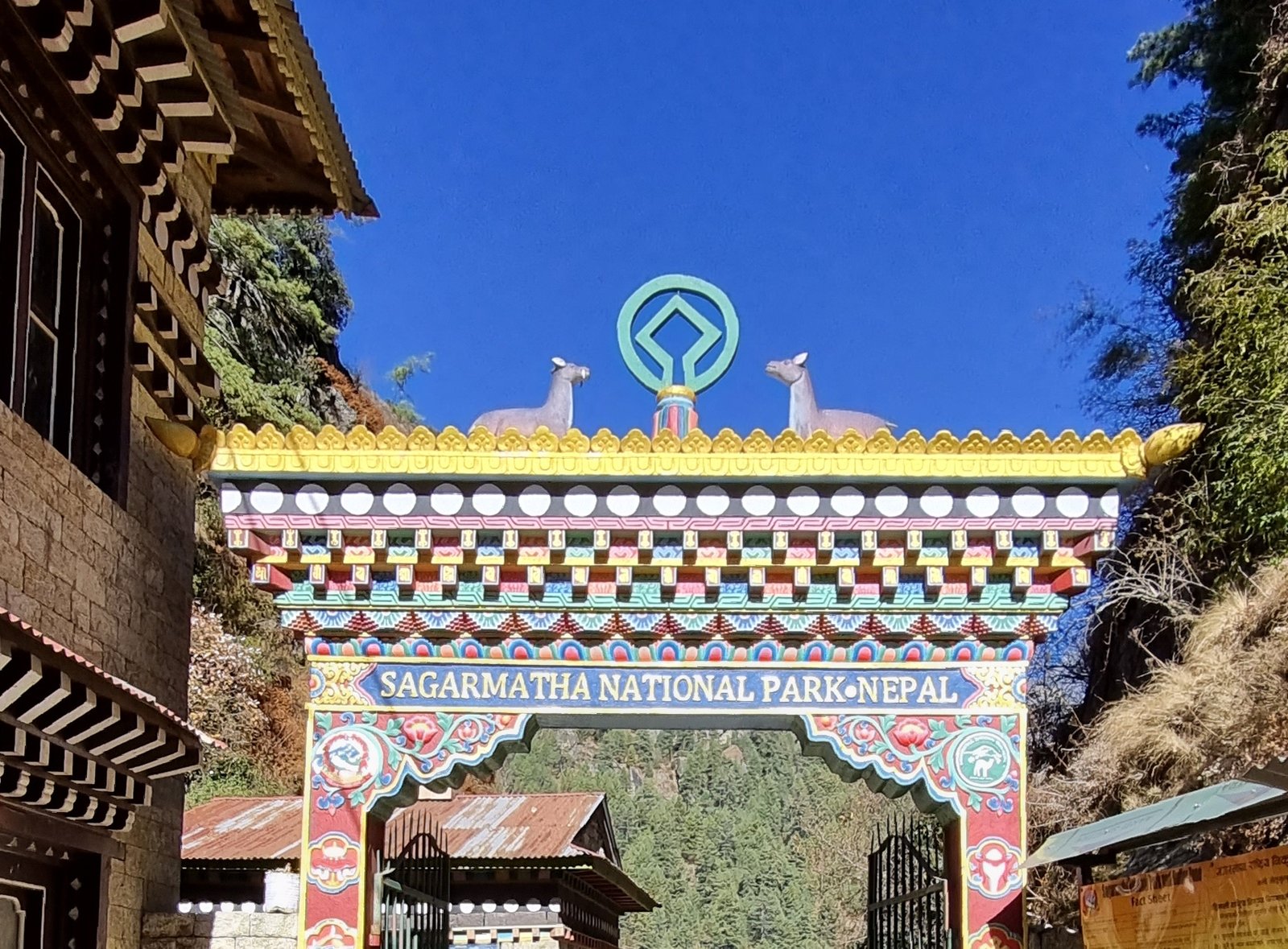
Sagarmatha National Park is the protected area that covers the entire Everest region, including the EBC trail, Gokyo Valley, and the approaches to Cho La Pass. It’s a UNESCO World Heritage Site and one of the most visited national parks in the world. Every trekker entering the park needs this permit — no exceptions.
Cost in 2026: Foreign trekkers pay NPR 3,000 per person. SAARC nationals (India, Pakistan, Bangladesh etc.) pay NPR 1,500. Nepali citizens pay NPR 100.
At current exchange rates, NPR 3,000 works out to roughly NZD $35 / GBP £18 / USD $22 per person — a relatively small cost in the context of an EBC budget.
Where to get it:
You can obtain this permit at two locations: the Nepal Tourism Board office in Kathmandu (in the Bhrikutimandap area of Thamel), or at the national park entrance checkpoint at Monjo — a small village you pass through on day four or five of the classic EBC trail.
Most trekkers on guided trips get it in Kathmandu before the trek starts, which avoids any delay at the Monjo checkpoint. If you’re going independently, I’d recommend doing the same — it takes around 30 minutes at the office and means one less thing to worry about on the trail.
What to bring:
- Passport (original)
- 1-2 passport-sized photos
- Payment in Nepalese Rupees (NPR) or USD
What happens at the checkpoint:
At the Sagarmatha National Park entrance at Monjo, a trek official will examine your permit, record your details in a ledger, and wave you through. The process takes about thirty seconds to two minutes. Keep your permit somewhere accessible — not buried at the bottom of your duffel — as it can be checked at multiple points along the trail.
Permit 2 — Khumbu Pasang Lhamu Rural Municipality Permit
This is the permit that replaced TIMS for the Everest region, and it’s the one most outdated guides either miss or describe incorrectly.
The Khumbu Pasang Lhamu Rural Municipality is the local government area covering the Khumbu valley — the district through which the entire EBC trail passes. The permit is essentially a local entry fee that funds trail maintenance, local infrastructure, and community services in the Sherpa villages you’ll walk through.
Cost in 2026: NPR 2,000 to NPR 3,000 per person — roughly NZD $23–35 / GBP £12–18 / USD $15–22.
Where to get it:
This permit is obtained in Lukla — right at the start of the trek. Your operator’s local guide will typically sort this on your behalf on arrival day in Lukla, before the trek begins in earnest.
If you’re independent, you’ll need to find the local municipality office in Lukla and arrange it yourself on arrival. It’s straightforward, but worth knowing it’s Lukla specifically — you can’t get it in Kathmandu.
What About TIMS?
Worth addressing directly because so many sources still list it.
Since March 2023, a licensed guide and agency-issued TIMS card are mandatory on major trekking routes like Annapurna, Langtang, and Manaslu. But the Everest region is different — the local rural municipality permit system replaced TIMS for EBC, and you do not need a TIMS card for the standard EBC route.
That said, permit requirements in Nepal can and do change. Verify this with your operator in the months before your trek — what’s accurate in May 2026 may have been updated by October. Evertrek’s local team will know the current requirements and handle everything accordingly.
What About the Gokyo Route and Cho La Pass?
We’re doing the EBC via Gokyo Valley route, which includes crossing the Cho La Pass. The good news: the same two permits cover this entire route. The Gokyo and Three Passes variations all fall within the same Sagarmatha National Park and Khumbu municipality permit area — no additional permits required for the Gokyo detour or the pass crossing.
Total Permit Cost for EBC — 2026
Here’s the full picture in one place:
| Permit | Cost (NPR) | Approx NZD | Approx GBP | Approx USD |
|---|---|---|---|---|
| Sagarmatha National Park | NPR 3,000 | ~NZD $35 | ~£18 | ~$22 |
| Khumbu Pasang Lhamu Municipality | NPR 2,000–3,000 | ~NZD $23–35 | ~£12–18 | ~$15–22 |
| Total per person | NPR 5,000–6,000 | ~NZD $58–70 | ~£30–36 | ~$37–44 |
In total, this usually ends up being between NPR 5,000 and 6,000 per person, depending on the exact municipality rate applied.
In the context of the overall EBC cost — which for two of us runs to over NZD $20,000 — permits are one of the smallest line items. I’ve covered all the numbers in detail in the Everest Base Camp Cost guide.
If You’re on a Guided Trek — What You Need to Do
Essentially: nothing, beyond making sure your operator knows you need them.
With Evertrek, permit logistics are handled by their Nepalese partners as part of the package. The Sagarmatha permit gets sorted in Kathmandu, the Khumbu municipality permit gets sorted in Lukla. You show up with your passport and cash, your guide handles the rest.
It’s one of the genuine practical advantages of a guided trek — permit queues in peak season can be slow, the paperwork is in Nepali, and knowing exactly which office to go to and what to say is local knowledge your guide has and you almost certainly don’t. For independent trekkers, it’s manageable but adds friction on what’s already a complex first day.
Practical Tips — Don’t Learn These the Hard Way
Bring passport photos. Most permit applications require 2 to 4 passport-sized photographs. Get a strip of eight done before you leave home — they’re cheap, and running around Thamel looking for a photo shop the morning before your Lukla flight is not how you want to start.
Carry cash in NPR. Permit offices in Kathmandu may accept USD, but Lukla is cash only in local currency. Have NPR on you from the moment you arrive — your operator should advise on how much to withdraw.
Keep permits accessible and waterproof. Keep your permits in a waterproof location that’s easily accessible, as they’ll be inspected at random checks throughout the trail. A small zip-lock bag inside your daypack’s top pocket works perfectly.
Don’t trek without them. Trekking without proper permits results in fines ranging from USD $100 to USD $500, potential deportation, and being barred from future Nepal visits. Checkpoints are frequent and strictly enforced.
The Honest Summary
Nepal’s permit system for EBC is simpler than most guides make it sound — two permits, roughly USD $40 per person in total, both arranged before or on the first day of the trek. If you’re on a guided trip, your operator handles it. If you’re going independent, Kathmandu for the Sagarmatha permit and Lukla for the municipality permit.
The one thing worth remembering: ignore any guide that tells you to get a TIMS card for EBC. That requirement was removed years ago — and you don’t want to pay for something you don’t need.
More EBC Planning Guides
- Flying to Lukla — The Ramechhap Change Explained
- Everest Base Camp Cost — Full Budget Breakdown
- EBC Trek Guide for Non-Mountaineers
- Evertrek vs Intrepid — Guided Operator Comparison
Andrew Dillon is a data consultant, runner, and triathlete based in Auckland, New Zealand. He is trekking EBC via Gokyo with Evertrek in October 2026. Follow his journey at abovethecloudtreks.com.
Thinking about booking EBC with Evertrek? As a current EverTrekker I can personally recommend them — and if you book using my referral link you’ll get £200 off and support this site at no extra cost to you. Check dates and prices here.