Flying to Lukla in 2026 — What Every EBC Trekker Needs to Know About Ramechhap
This article contains affiliate links. If you book or purchase through these links I may earn a small commission at no extra cost to you. I only recommend products and companies I genuinely use or have researched thoroughly.
Here’s something most EBC planning guides don’t tell you clearly enough: if you’re trekking to Everest Base Camp in October or November 2026, you almost certainly will not be flying to Lukla from Kathmandu.
You’ll be waking up at midnight. Getting into a vehicle in Thamel. And driving four to five hours east through the Nepalese hills to a small airport most people have never heard of.
Welcome to Ramechhap. Welcome to the part of EBC planning that catches people off guard.
Why Flights to Lukla No Longer Leave from Kathmandu
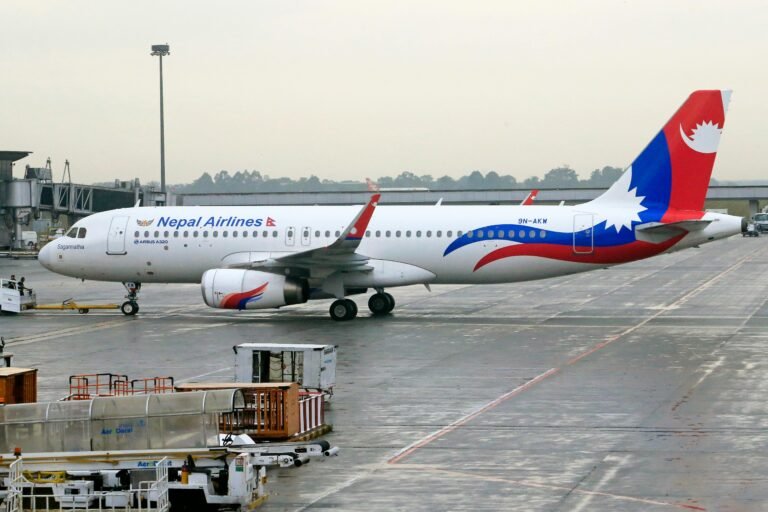
For decades, the routine was simple: fly into Kathmandu, spend a night acclimatising, then catch a short morning flight from Tribhuvan International Airport to Tenzing-Hillary Airport in Lukla. Twenty-five to thirty-five minutes. Himalayas out the window. Trek begins.
That routine started changing in 2022. By October of that year, the Civil Aviation Authority of Nepal (CAAN) made it official: during peak trekking seasons, virtually all flights to Lukla would be redirected away from Kathmandu to Manthali Airport in the Ramechhap district.
The reason is straightforward. Tribhuvan International Airport in Kathmandu handles both international and domestic traffic, and the morning weather window for Lukla flights — roughly 6am to 9am, before cloud cover and mountain winds make the approach unreliable — is extremely narrow. When hundreds of trekkers are all trying to fly in the same window across spring and autumn, the system buckles. Delays stack. Some trekkers miss their departure day entirely.
Ramechhap solves this. Manthali Airport sits at 474 metres above sea level, well below the weather patterns that affect Kathmandu at 1,400 metres. It handles no international traffic. The visibility window is longer and cleaner, airlines can run multiple rotations to Lukla in a single morning, and delays are significantly rarer.
The trade-off is a 130km drive from Kathmandu that takes four to five hours — and because flights still need to catch that early morning weather window, most trekkers are leaving Kathmandu in the middle of the night.
When Does the Ramechhap Rule Apply?
The CAAN policy operates during peak trekking seasons:
- Spring: March to May
- Autumn: September to November
If you’re trekking EBC in October 2026 — which is prime season — you will be flying from Ramechhap. This isn’t a maybe. Plan accordingly.
Outside these windows, during the quieter months of winter and monsoon, flights may still operate from Kathmandu’s domestic terminal. But for the vast majority of EBC trekkers, Ramechhap is now the reality.
What the Journey Actually Looks Like
Here’s the honest timeline for a Ramechhap departure day:
Night before (Kathmandu): Your operator or hotel will brief you on departure time. Expect to be told your vehicle leaves between midnight and 2am. This is not a drill.
The drive: Around 130km along the BP Highway through the Sindhupalchok hills. It’s winding road in the dark. Budget 4.5 to 5 hours. Some people sleep in the vehicle. Others stare at their phone questioning their life choices. Both are valid.
Arrival at Manthali Airport: You’ll arrive before dawn. The airport is small and simple — a world away from Kathmandu’s busy terminal. Check-in is manageable. Queues are shorter than you’d expect given how many trekkers are doing the same thing.
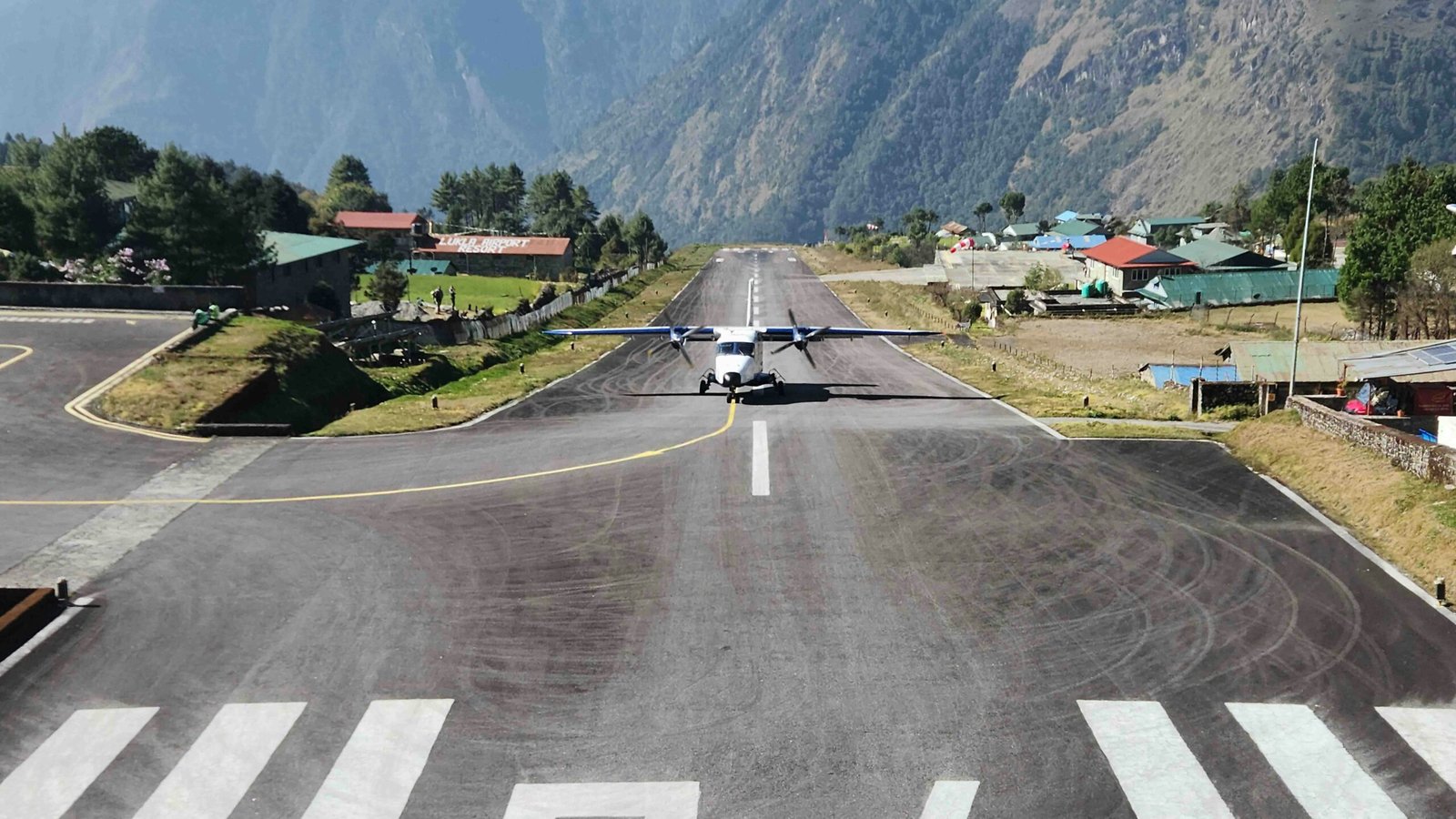
The flight to Lukla: Around 15 to 20 minutes. Shorter than the Kathmandu route but just as dramatic. Lukla’s Tenzing-Hillary Airport remains one of the most technically challenging approaches in commercial aviation — a short upward-sloping runway on a hillside at 2,860 metres, surrounded by mountains. The pilots who fly this route are among the most experienced mountain aviators in the world, and the safety record reflects that. It’s spectacular, not reckless.
Arrival in Lukla: You’re at 2,860 metres. The trek has begun. Day one tiredness is real — factor in that you’ve been awake since midnight.
The Cost — And Who Books It
The Kathmandu to Lukla flight (via Ramechhap) costs approximately $200–$250 USD per person in 2026, depending on the airline and season. Return flights are similarly priced.
This is typically quoted in USD regardless of where you’re booking from, as the internal Nepalese aviation market prices these routes in dollars for foreign trekkers.
Important: This cost is usually billed separately from your main operator package. In our case with Evertrek, the internal flights are handled through their Nepalese partners and billed at approximately $450 USD per person return — this is worth confirming explicitly with your operator before you book, as it’s a meaningful addition to the headline trek price. I’ve covered this in detail in the Everest Base Camp Cost guide.
Who books it: If you’re on a guided trek, your operator should handle all Lukla flight booking and the Ramechhap transfer. This is one of the genuine advantages of a guided operator over independent trekking — you’re not scrambling to book a flight that requires local knowledge, operates on a tight weather window, and can sell out weeks in advance during peak season. Confirm this is included when you enquire.
What If Flights Are Cancelled or Delayed?
Weather cancellations at Lukla are part of the EBC experience. Even from Ramechhap, with its better reliability, mountain weather can ground flights — typically when cloud cover rolls in over the Solukhumbu valley and reduces visibility at the Lukla end.
A few things to know:
Build buffer days into your schedule. Most reputable operators already do this, with contingency days built into the itinerary. Check yours does.
Your operator will manage rebooking. With a guided trek, this is handled for you. Independent trekkers have to navigate rebooking themselves, which can be stressful and expensive at peak season.
The alternative is a helicopter. If fixed-wing flights are grounded for an extended period and your schedule can’t flex, helicopter transfer to Lukla is possible — at significantly higher cost (roughly $500–$600 USD per person). Travel insurance that covers trekking delays and alternative transport costs is worth having for exactly this scenario. I’m using Cover-More NZ, which includes this type of cover. World Nomads is another option.
The most common pattern is a one-day delay. Flights are usually grounded for a morning and resume the next day when visibility improves. It’s inconvenient but rarely catastrophic if you have buffer days.
What Your Operator Should Be Handling
If you’re on a guided trek, this is what should be sorted for you without you having to think about it:
- Internal flight booking (Ramechhap to Lukla and return)
- Pre-dawn vehicle transfer from your Kathmandu hotel to Manthali Airport
- Rebooking and logistics if flights are cancelled
- Baggage management (Lukla flights have strict weight limits — typically 15kg hold plus a small daypack)
If your operator isn’t explicitly confirming all of these, ask the question directly before you depart. The Ramechhap transfer in particular — knowing your vehicle is booked and leaving at a confirmed time — is not something you want to be unclear about at 11pm the night before day one.
The Baggage Limit — Don’t Get Caught Out
Lukla flights enforce strict baggage allowances that are tighter than most international flights:
- Hold baggage: 15kg maximum
- Hand luggage: Small daypack, typically 5kg
If you’re hiking with a large pack, this matters. Most trekkers check their main pack as hold baggage and carry a daypack on the flight. Your total gear weight needs to be planned around this limit — it’s one of the practical reasons the EBC packing list focuses on lightweight, multi-use items rather than volume.
Full gear breakdown is in the Honest EBC Packing List.
The Bottom Line
Flying to Lukla in 2026 means Ramechhap. It means a 4am drive in the dark, a small airport in the hills, and a 20-minute flight into one of the world’s most dramatic runways. It’s less convenient than the old Kathmandu routine — but it’s more reliable, and reliability matters when your entire trek itinerary hinges on getting off the ground on day one.
If you’re on a guided trek with a reputable operator, this should be largely invisible to you beyond setting an alarm for midnight. If you’re going independent, it requires careful advance planning — flight booking, transfer logistics, and a solid understanding of what happens if the weather doesn’t play ball.
Either way, knowing it’s coming means it won’t catch you off guard.
Plan the Rest of Your EBC Trip
- EBC Trek Guide for Non-Mountaineers — the complete overview
- Everest Base Camp Cost — Full Budget Breakdown — including Lukla flight costs
- How Difficult is the EBC Trek? — an honest assessment
- Evertrek vs Intrepid — Guided Operator Comparison — which operator to choose
Andrew Dillon is a data consultant, runner, and triathlete based in Auckland, New Zealand. He is trekking EBC via Gokyo with Evertrek in October 2026 – get £200 off here. Follow his journey at abovethecloudtreks.com.