Everest Base Camp Trek Cost — A Complete & Honest Budget Breakdown (2026)
This article contains affiliate links. If you book or purchase through these links I may earn a small commission at no extra cost to you. I only recommend products and companies I genuinely use or have researched thoroughly.
One of the first questions anyone asks when considering Everest Base Camp is: how much is this actually going to cost?
Most articles give vague ranges without real numbers. This one is different. I’m Andrew Dillon, a New Zealand-based hiker and occasional triathlete trekking to EBC with Evertrek in October 2026. These are my actual Everest Base Camp costs — real bookings, real prices, real exchange rate pain — for two people flying from Edinburgh, Scotland, with a New Zealand home base.
Your costs will differ depending on where you’re flying from, which operator you choose, and how much gear you need to buy. But this gives you a genuine, honest baseline to plan against.
Let’s get into it.
The Bottom Line First
For two people, our total EBC budget looks like this:
| Item | Two People (GBP) | Two People (NZD approx) |
|---|---|---|
| Guided trek (Evertrek) | £5,100 | ~NZD$11,730 |
| International flights | £1,288 | ~NZD$2,962 |
| Internal Lukla flights | ~£710 | ~NZD$1,633 |
| Travel insurance | ~£410 | ~NZD$1,234 |
| Extra Kathmandu nights | £300 | ~NZD$690 |
| On-trek spending money | ~£620 | ~NZD$1,800 |
| Nepal visas | ~£80 | ~NZD$184 |
| Vaccinations | ~£300 | ~NZD$870-1,104 |
| Gear | — | ~NZD$1,500-2,000 |
| Total (excluding gear) | ~£8,808 | ~NZD$20,223 |
Exchange rates used: £1 = NZD$2.30 (April 2026 rate). We use Wise to transfer money between our UK and NZ accounts — the exchange rate is mid-market and the fees are transparent. If you’re managing a budget across currencies for this trip, it’s worth having.
Gear treated separately as a long-term investment.
That’s a significant investment. But broken down properly, every line item makes sense — and there are ways to reduce costs if budget is a priority.
Cost Breakdown — Item by Item
1. The Guided Trek — £2,550 Per Person
We booked with Evertrek for their EBC via Gokyo Valley trip at £2,550 per person — £5,100 for two.
This is the single largest cost and covers an enormous amount:
What’s included:
- All accommodation throughout (5-star hotel in Kathmandu, teahouses on trek)
- All meals during the trek
- Expert first aid-trained guides and porters
- All trekking permits including Sagarmatha National Park entry
- Private airport transfers
- Filtered water on the majority of the trek
- Oximeter and heart rate monitor carried by guides
- Free 80-litre EverTrek duffel bag, t-shirt, cap and map
- Free hire of down jacket and winter sleeping bag (on request)
- Welcome and farewell dinners
- EverTrek Trip Planner App
When you break that down across an 18-day trip, £2,550 per person is genuinely reasonable for what you receive.
Payment schedule with Evertrek:
- £200 deposit on booking
- 50% of balance 6 months before departure
- Final payment 3 months before departure
This staged payment structure helps spread the cost — but plan your cash flow accordingly.
The exchange rate reality for NZ and Australian bookers:
This is something no other EBC cost guide mentions, because most are written from a UK or US perspective.
We booked in September 2024 when £1 = NZD$2.10. By our second payment in April 2026, the rate had moved to £1 = NZD$2.30. That 20 cent swing on a £2,350 balance payment (per person) added approximately NZD$470 per person in additional cost — real money that wasn’t in our original budget.
My recommendation: If you’re paying in GBP from a NZD or AUD base, use Wise for your foreign currency transfers. The exchange rates are significantly better than bank rates and you can monitor the rate and transfer when conditions are favourable. I use Wise for all my international transfers and it’s saved us meaningfully over bank rates.
2. International Flights — £644 Per Person
We’re flying Qatar Airways Edinburgh → Doha → Kathmandu return at £644 per person — £1,288 for two.
A few notes on flights:
Flying from the UK vs New Zealand: We’re fortunate to be starting our trip from Edinburgh rather than New Zealand for the Nepal leg — UK to Kathmandu flights are significantly cheaper than Auckland to Kathmandu. If you’re flying from NZ or Australia, budget considerably more — Auckland to Kathmandu typically costs NZD$2,000-3,500 return depending on routing and season.
Qatar Airways via Doha is one of the best routings for Kathmandu — reliable, comfortable, and Doha is an excellent transit hub. Other good options include Emirates via Dubai and Turkish Airlines via Istanbul.
Book early: October is peak EBC season and flights fill up. We booked well in advance to secure this price. Leave it too late and you’ll pay significantly more.
Build in buffer days: The Lukla flight is notorious for weather delays and cancellations. Book your international flights with at least one buffer day on either end of the trek — ideally two. Missing your international connection because of a Lukla delay is a very expensive problem.
3. Internal Flights to Lukla — ~$450 USD Per Person
The internal flight from Kathmandu (or increasingly Ramechhap) to Lukla is not included in most guided trek prices — including Evertrek.
Cost: Approximately $450 USD per person return (~£355 / NZD$815 at current rates)
How it works with Evertrek: Their Nepal partners will send you a payment link 2-3 months before your departure date. It’s handled for you — no need to book independently — but budget for it separately.
Why Ramechhap? Many Lukla flights now operate from Ramechhap Airport (about 5-6 hours from Kathmandu) rather than Tribhuvan International Airport in Kathmandu. This was introduced due to upgrades at Tribhuvan and is now the more reliable option. Evertrek handle all the logistics including the overnight stay if required — it’s included in your trek cost.
The Lukla flight itself is one of the most dramatic in the world — a short runway on the edge of a mountain at 2,860m. Don’t let that put you off. It’s flown daily by experienced pilots and is perfectly safe, but the views are extraordinary.
4. Travel Insurance — Non-Negotiable
This is the line item you absolutely cannot skip or underinsure.
Standard travel insurance does not cover high altitude trekking or emergency helicopter evacuation. You need a policy that specifically covers:
- Trekking above 4,000m (some policies cap at 3,000m or 4,000m — read the fine print)
- Emergency helicopter evacuation (can cost USD$5,000-15,000 without insurance)
- Medical expenses at altitude
- Trip cancellation
What we did: We used Cover-More insurance based in New Zealand. At NZD$1,065 for two people for the base policy, plus a NZD$169 Adventure Activity add-on that specifically mentions Everest Base Camp — total NZD$1,234 for two people (~£425).
An important note for NZ and Australian travellers: Many travel insurance companies require your trip to start from your country of residence. Since we’re starting our Nepal leg from Scotland rather than New Zealand, this ruled out several providers. Cover-More specifically allowed a non-NZ departure point — worth checking this detail carefully before purchasing.
The adventure activity add-on is essential. Cover-More explicitly lists Everest Base Camp trekking in this add-on — that level of specificity gives genuine peace of mind that you’re covered for the actual activity, not just generic hiking.
If you are starting from the country you are resident (a much more likely scenario), World Nomads is a widely recommended option that covers high altitude adventure activities. Get a World Nomads quote here.
My strong advice: Do not try to save money on insurance. The helicopter evacuation cost alone — if you need it — will dwarf every other line item in this budget.
5. Extra Accommodation in Kathmandu — £100 Per Night
Evertrek include three nights in Kathmandu in their trek package — two before the trek and one after. We’re adding three additional nights at the end before flying to Bhutan, at £100 per night through Evertrek’s extended stay arrangement.
Total extra accommodation: £300 for two people.
The included hotel is the 5-star Hotel Aloft in Thamel — genuinely excellent with pool, gym and spa. After two weeks in teahouses, this feels like an extraordinary luxury.
If you’re booking independently, Thamel has accommodation at every price point from $15 budget guesthouses to 5-star luxury. For EBC trekkers I’d recommend mid-range or above — you want to arrive rested and leave recovered.
6. On-Trek Spending Money — ~NZD$100 Per Night
Most of your costs on the trail are covered by your guide company. But you’ll want personal spending money for:
- Hot showers (£3-5 each — less common and more expensive at altitude)
- WiFi access (charged per hour or per day at most teahouses)
- Device charging (electricity isn’t free on the trail)
- Snacks and drinks beyond meals
- Souvenirs in Namche Bazaar
- Tips for guides and porters
Evertrek recommend £20-45 per day. We’re budgeting NZD$100 per day for two people across 18 days — approximately NZD$1,800 total (~£620).
On tipping: This is an important cultural expectation in Nepal. Evertrek recommend tipping approximately 10% of your trek cost — around £255 for a £2,550 trek. We’re treating this as covered within our daily budget rather than a separate line item. Your guides and porters work extraordinarily hard and tips represent a meaningful portion of their income.
Bring cash: ATMs exist in Kathmandu and Namche Bazaar but can be unreliable. Evertrek recommend arriving with US dollars and converting to Nepalese Rupee in Kathmandu. There’s no reliable way to pay by card on the trail.
7. Nepal Visa — ~$50 USD Per Person
Nepal visa on arrival costs $50 USD per person (~£40 / NZD$115). For two people that’s approximately £80 / NZD$230.
You can also apply for an e-visa before arrival at nepal.gov.np — often quicker than the arrival queue which can be long.
Bring two passport photos for the visa application — or use the photo machines at Tribhuvan Airport.
8. Vaccinations — Budget NZD$435-552 Per Person
Nepal requires no mandatory vaccinations for entry, but several are strongly recommended and worth taking seriously.
Recommended vaccinations:
Hepatitis A & B Combo (Twinrix)
- Cost: NZD$130-160 per dose
- Requires 3 doses for full immunity: given at 0, 1 month, and 6 months
- Important timing note: If you’re trekking in October, you need to start this course now. There is an accelerated schedule (0, 7 days, 21 days) — ask your GP or travel clinic about this option.
- Total cost per person: NZD$390-480
Tetanus, Diphtheria & Whooping Cough (Boostrix)
- Cost: NZD$45-72 per dose
- Single booster dose required
- Total cost per person: NZD$45-72
Other vaccinations to discuss with your GP:
- Typhoid
- Rabies (recommended if trekking in remote areas)
- Japanese Encephalitis (lower risk in Khumbu but worth discussing)
Total vaccination budget per person: NZD$435-552
For two people: NZD$870-1,104
I have a GP appointment coming up in a couple of weeks to finalise vaccinations and discuss Diamox — I’ll update this section with actual costs when that’s done.
9. Diamox (Acetazolamide) — Discuss With Your GP
Diamox is a prescription medication used as a preventative for altitude sickness. Many EBC trekkers use it, particularly above 3,000m.
Cost: The medication itself is relatively inexpensive — typically NZD$20-40 for a course. The GP appointment to get the prescription is the main cost, which varies significantly depending on your healthcare system.
Ask your GP about: Dosage (typically 125-250mg twice daily), when to start taking it, and any contraindications. Some people experience side effects including increased urination and tingling in the extremities.
Important: Diamox is not a substitute for proper acclimatisation. It reduces risk but doesn’t eliminate it. Your EBC itinerary’s built-in acclimatisation days at Namche and Gokyo are essential regardless of whether you take medication.
10. Gear — An Investment, Not Just a Trip Cost
I’m treating gear separately from trip costs for one simple reason: good outdoor gear lasts years and will be used far beyond EBC.
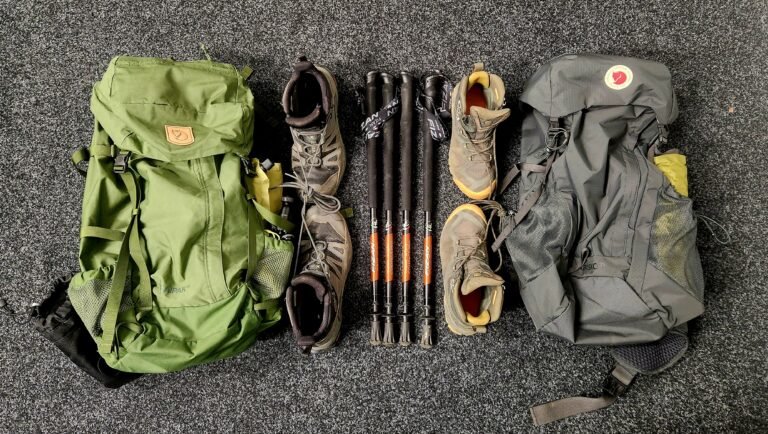
Our gear budget for EBC-specific purchases is approximately NZD$1,500-2,000 for two people — but we already owned significant kit from years of hiking in Scotland and New Zealand.
What we already owned (no additional cost):
- Salomon X Ultra 4 GTX hiking boots (proven on Kepler Track and Greenstone-Caples)
- Kathmandu Ridge 3L Gore-Tex rain jacket
- Macpac Sundowner down jacket
- Fizan Compact Pro trekking poles
- Petzl Tikka+ head torch
- Icebreaker Multisport Merino glove liners
- Kathmandu Gore-Tex ski gloves
- Nordic Socks (multiple pairs)
- Sea to Summit silk sleeping bag liner
- Sea to Summit dry bags
- Deuter and Vaude packs (though neither ideal for EBC daily use)
What we still need to buy:
- Daypack 30-40L (looking at Osprey Stratos 34, Cotopaxi, Fjällräven)
- Merino base layers
- Trekking trousers
- Warm hat and buff
- Sunglasses (UV400 essential at altitude)
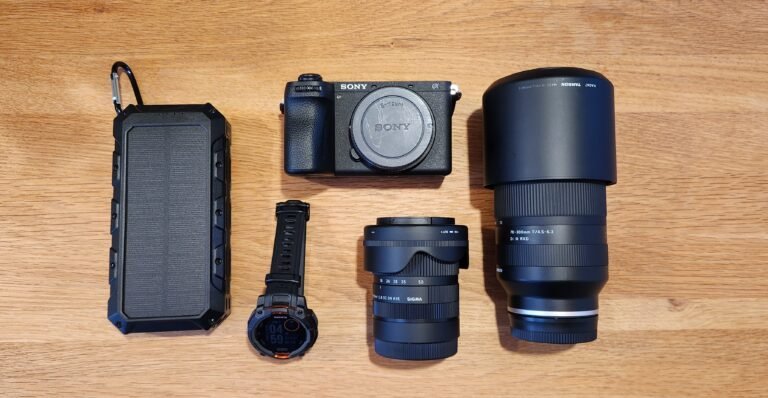
- Power bank (20,000mAh recommended)
- Various accessories
Could you do it cheaper? Yes — Evertrek provide free hire of a down jacket and winter sleeping bag, which removes two of the most expensive items. Gear can also be rented or bought cheaply in Kathmandu’s Thamel district, though quality varies.
Could you spend more? Absolutely — there’s no upper limit to outdoor gear spending. But you don’t need the most expensive kit to complete EBC successfully.
For a full breakdown of exactly what I’m packing and why, read my honest EBC packing list.
How to Reduce the Cost
If the full budget feels daunting, here are genuine ways to reduce it:
Go independent instead of guided
A guided trek with a reputable company is the safest and most straightforward option, but it’s not the only one. Independent trekkers hire local guides and porters directly in Kathmandu or Lukla at significantly lower cost. This requires more planning and confidence but is genuinely viable for experienced trekkers.
Travel in shoulder season
Late September or early November have fewer trekkers and often lower teahouse prices than peak October. Flights may also be cheaper outside peak season.
Hire gear in Kathmandu
Thamel is packed with gear rental shops. Down jackets, sleeping bags, trekking poles, and even boots can be hired cheaply. Quality varies — inspect everything carefully.
Use Evertrek’s free gear hire
If you book with Evertrek, take advantage of the free down jacket and sleeping bag hire. That alone saves NZD$500-800 in gear purchases.
Sort travel insurance early
Insurance prices can vary significantly. Get multiple quotes and compare — but never compromise on the coverage itself.
The True Everest Base Camp Cost — Our Honest Total
For two people, flying from Edinburgh, based in New Zealand, trekking with Evertrek in October 2026:
Total excluding gear: approximately £8,800 / NZD$20,200
Per person excluding gear: approximately £4,400 / NZD$10,100
Add gear (amortised as long term investment): NZD$750-1,000 per person
Is it expensive? Yes. Is it worth it? Every person I’ve spoken to who has done EBC says unequivocally yes.
The mountain has a way of making the cost feel irrelevant the moment you arrive.
More EBC Planning Guides
- The Honest EBC Packing List
- Everest Base Camp Cost – A Complete and Honest Budget
- Sleeping Bag for EBC — Hire vs Buy
- Altitude Sickness on the EBC Trek
- How to Train for Everest Base Camp
- EBC Trek Guide for Non-Mountaineers
Thinking about booking EBC with Evertrek? I’m trekking with them in October 2026 and can genuinely recommend them — voted the UK’s No.1 adventure trekking company with a 95% success rate and a 95% trek completion rate. Check dates and availability here — and you’ll receive £200 off your booking.
For international payments in foreign currencies, I use and recommend Wise — significantly better rates than banks and essential for NZ and Australian trekkers paying UK operators.
For travel insurance, NZ and Australian trekkers should check Cover-More — they specifically cover EBC and allow non-NZ departure points. UK trekkers should look at World Nomads.
Andrew Dillon is a data consultant, runner, and occasional triathlete based in New Zealand. He is trekking to Everest Base Camp via Gokyo with Evertrek in October 2026. Read his complete EBC guide for non-mountaineers, his honest EBC packing list, and his guide to the best time to trek EBC.