EBC Trek Fitness Requirements — How Fit Do You Actually Need to Be?
This article contains affiliate links. If you book or purchase through these links I may earn a small commission at no extra cost to you. I only recommend products and companies I genuinely use or have researched thoroughly.
The most common question after “how much does it cost?” is “am I fit enough?” Here’s the honest answer, with actual benchmarks rather than reassuring generalities, to help you judge your EBC trek fitness.
The Benchmark Test
Before getting into training advice, here’s a simple fitness test. Answer these honestly:
- Can you walk uphill continuously for 45–60 minutes without stopping?
- Can you complete a 15km hike with a 7kg pack over hilly terrain without excessive fatigue?
- Can you do this on consecutive days without your body completely shutting down?
- Are your knees and ankles healthy enough for sustained descents on uneven terrain?
If the answer to all four is yes, you have the baseline fitness to start specific EBC preparation. If some answers are no, that’s not a reason to abandon the plan — it’s information about what to work on.
The minimum benchmark from experienced EBC guides: comfortable walking 10km with a 5kg pack on moderately hilly terrain. Below that level, the trek becomes suffering rather than trekking.
What the Trail Actually Demands
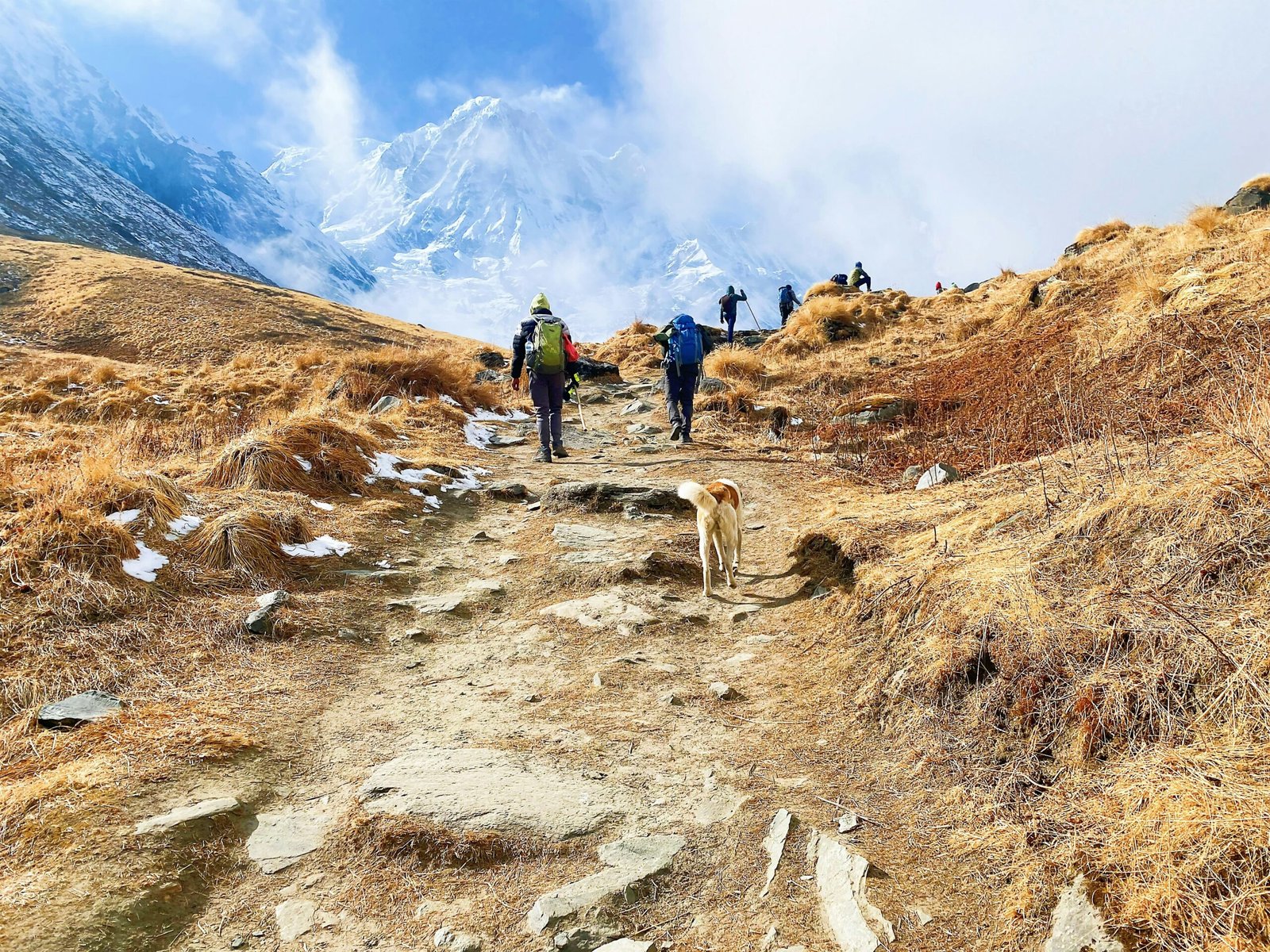
EBC is not technically difficult — there’s no climbing, no ropes, no glacier navigation on the classic route (the Gokyo route with the Cho La Pass crossing adds a glaciated section, covered in the Cho La Pass guide). What it demands is sustained endurance over consecutive days at altitude.
The daily reality:
- 5–8 hours of walking per day
- 8–10 consecutive trekking days between rest days
- Carrying a daypack of 5–7kg
- Altitude from 2,860m at Lukla rising to 5,364m at EBC
- At Base Camp, roughly 50% of the oxygen available at sea level
The cumulative element is what catches people out. Day one feels manageable. Day eight at 4,500m with tired legs is a different calculation entirely. The fitness you need isn’t just for a single hard day — it’s for sustained output over two-plus weeks with limited recovery.
The Four Fitness Components That Matter
1. Cardiovascular endurance — the most important
Your heart and lungs are the limiting factor at altitude, not your leg strength. At 5,000m, even slow walking makes your cardiovascular system work harder than a moderate run at sea level. Building a strong aerobic base — the ability to sustain steady effort over several hours — is the single most valuable thing you can do.
Best training: long steady hikes, cycling, running, swimming. Consistency over intensity. Zone 2 training (conversational pace, sustained for 60+ minutes) builds exactly the aerobic base EBC requires.
2. Leg strength — for the descents as much as the climbs
Most people assume the climbs are the hard part. The descents are where knees break down. Steep, sustained downhill on rocky terrain puts enormous load through the quad and knee joint — and EBC has significant descents, particularly on the return. Squats, lunges, step-ups, and loaded stair climbing build the leg strength to handle them.
3. Pack-carrying endurance
Training without a pack and then walking with 7kg on your back for 8 hours is a common mistake. Your back, shoulders, and hip flexors need conditioning specific to carrying weight. Train with your actual daypack loaded to trek weight — the earlier you start this, the better.
4. Mental endurance
The least quantifiable and arguably the most important above 4,500m. There will be days on EBC where you feel rough, the weather is against you, and the hut is still two hours away. The trekkers who make it to Base Camp aren’t always the fittest — they’re the ones who stay patient, manage their pace, and don’t let a bad hour become a reason to stop.
Age Is Not the Barrier — Preparation Is
Guides who watch hundreds of trekkers every season are consistent on this: fitness trumps age every time. 70-year-olds who train properly outperform 25-year-olds who don’t. The mountain doesn’t care how old you are. It cares whether you’ve prepared.
The corollary: being young and fit without specific preparation is not enough. A sedentary person who runs occasionally but has never walked consecutive days with a pack will struggle significantly more than a 55-year-old who has spent six months doing hill walks with a loaded rucksack.
The Gokyo Route — Additional Demands
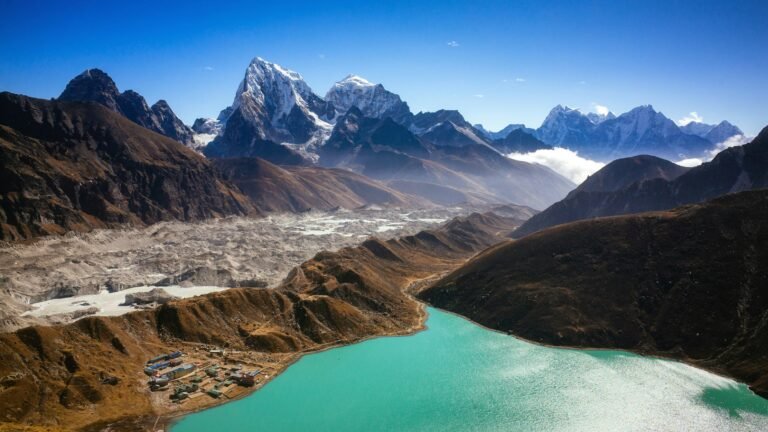
The standard EBC route is the benchmark above. The Gokyo Valley route — which we’re doing with Evertrek in October — adds:
- Gokyo Ri (5,357m) — a pre-dawn 600m climb before the Cho La crossing
- Cho La Pass (5,420m) — a glaciated crossing requiring care on the ascent and descent
- Additional days at altitude
If you’re considering the Gokyo route, the fitness baseline is meaningfully higher. The Cho La crossing in particular is not just long hiking — it’s demanding terrain that requires confidence on steep, potentially icy ground.
Where My EBC Trek Fitness Stands
My fitness background is useful context here. I went from genuinely poor fitness — around 100kg and barely able to run — to completing the Mount Festival of Multisport Half Iron Distance Triathlon in January 2025 in 5:46. That’s a 2km swim, 90km bike, and 21km run. Multi-day endurance is where my training is pointed.
In April 2026 we completed the Kepler Track — 60km, four days, 15kg pack, -10°C wind chill on the ridge section. The body held up well, the knee that had been troubling me from running held throughout, and by day three we were moving strongly.
From June 2026 I’ve been doing sessions at Auckland Altitude Training Centre to simulate low-oxygen conditions — early results from that programme will be worth reading about in the altitude sickness article.
I’m not going into EBC as a casual hiker. But I’m also not going in as an experienced Himalayan trekker — this is my first time above 2,500m. The preparation is as thorough as I can make it. The mountain will tell us the rest.
The Honest Summary
You don’t need to be an athlete. You need to be able to walk 5–8 hours per day, on consecutive days, with a pack, at altitude, without your body breaking down. That requires specific preparation — not the gym fitness of someone who lifts three times a week, but the sustained endurance of someone who regularly walks long distances in real terrain with real weight.
If you’re already a regular hiker with multi-day experience, your preparation is about altitude-specific conditioning and building pack-carrying endurance for this specific duration and elevation. If you’re starting from a lower baseline, 16–20 weeks of progressive training is realistic. If you’d like a full training plan, it’s covered in the How to Train for EBC article.
The mountain is achievable. It just requires you to do the work first.
More EBC Planning Guides
- How to Train for Everest Base Camp
- How Difficult is the EBC Trek?
- Altitude Sickness on the EBC Trek
- Cho La Pass — What to Expect
- EBC Trek Guide for Non-Mountaineers
Andrew Dillon is a data consultant, runner, and triathlete based in Auckland, New Zealand. He is trekking EBC via Gokyo with Evertrek in October 2026. Follow his journey at abovethecloudtreks.com.