Nepal Visa Guide for EBC Trekkers — Everything You Need in 2026
This article contains affiliate links. If you book or purchase through these links I may earn a small commission at no extra cost to you. I only recommend products and companies I genuinely use or have researched thoroughly.
Of all the planning involved in an EBC trek, the Nepal visa is one of the least stressful parts. There’s no embassy appointment, no weeks-long wait, and for the vast majority of nationalities it’s available on arrival at Kathmandu airport.
Here’s exactly what you need to know — including the one question that trips most trekkers up before they’ve even left home.
Do You Need a Visa for Nepal?
Most international travellers can get a Tourist Visa on Arrival when landing at Tribhuvan International Airport in Kathmandu or entering through designated land border crossings. Nepal’s visa policy is traveller-friendly and designed to encourage tourism — which means you usually don’t need to visit a Nepalese embassy before travelling.
The main exception: citizens of a small number of countries must apply in advance through a Nepalese diplomatic mission. Indian nationals are visa-exempt entirely. If you’re unsure about your nationality, check the official Nepal Department of Immigration site at immigration.gov.np.
How Much Does the Nepal Visa Cost?
Nepal tourist visas are available on arrival for $30 to $125 depending on duration, with multiple-entry included as standard. The three options in 2026:
| Duration | Cost (USD) | Best for |
|---|---|---|
| 15 days | $30 | Short trips only — not recommended for EBC |
| 30 days | $50 | Most EBC trekkers — the standard choice |
| 90 days | $125 | Extended stays, multiple regions |
For a standard EBC trek plus a few days in Kathmandu, the 30-day visa at $50 is what most trekkers need.
A word on the 15-day option: it sounds sufficient but leaves zero buffer for weather delays, altitude acclimatisation days, or simply lingering longer than planned. Many trekkers have had to cut EBC trips short because they chose 15 days to save $20. Don’t be that person. Get the 30-day.
For our trip — 3 nights Kathmandu pre-trek, 18 days trekking, 3 nights Kathmandu post-trek — we’re comfortably within the 30-day window before flying to Bhutan.
Can You Pre-Register Online?
Yes — and during peak season it’s worth doing. Travellers can complete the online visa application form before arriving in Nepal to save time at the airport. It’s especially helpful during peak trekking seasons.
The online pre-registration is available at immigration.gov.np up to 15 days before arrival. You still collect the physical visa sticker at the airport, but the form-filling is done and you move through the counter faster. In October, when hundreds of trekkers are all arriving within the same narrow window, the queue at immigration can be significant — pre-registering is a small effort that saves real time.
The On-Arrival Process — Step by Step
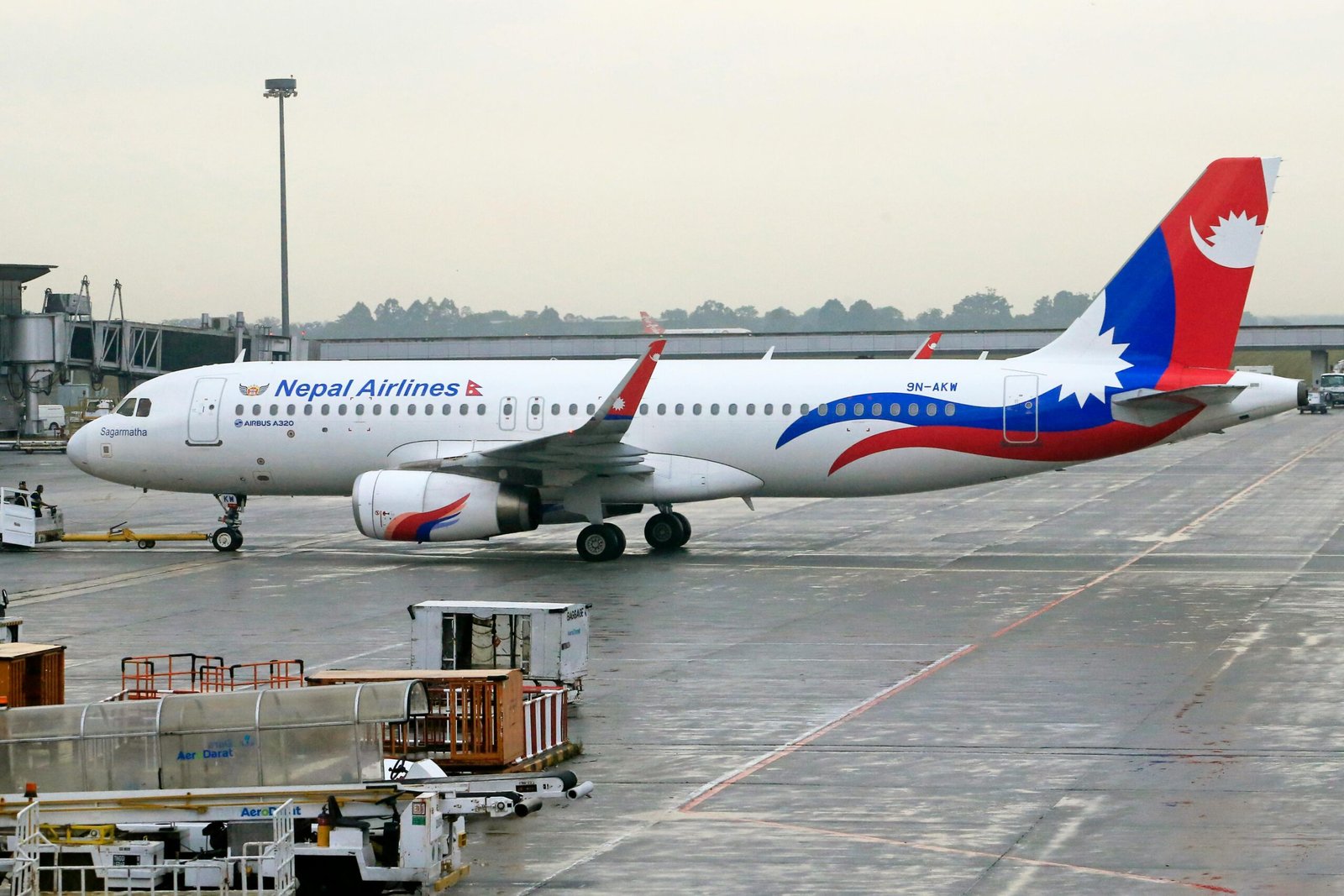
Upon disembarking at Tribhuvan International Airport, eligible passengers proceed directly to the dedicated visa on arrival counters before reaching the primary immigration desks.
Here’s exactly what happens:
Step 1 — Fill in the form Paper forms are available at the airport if you haven’t pre-registered online. Basic details — name, passport number, length of stay, purpose of visit (Tourism/Trekking).
Step 2 — Join the visa queue Separate counters for visa on arrival and pre-registered arrivals. The process usually takes 20–60 minutes depending on arrival traffic. During peak months (September–November) it may take slightly longer. October is peak season — budget an hour.
Step 3 — Pay the fee USD cash is the smoothest option — bring exact or near-exact notes. Some counters accept card but cash is faster and avoids any card machine issues after a long flight. Don’t rely on the ATM in the arrivals hall being available.
We use Wise to manage money across currencies when travelling — it’s the easiest way to hold USD alongside GBP and NZD without paying excessive conversion fees.
Step 4 — Collect your visa sticker Passport stamped, visa sticker applied. You’re in Nepal.
What to Bring for the Visa
Keep these accessible in your hand luggage — not buried in your checked bag:
- Passport — valid for at least 6 months beyond your departure date from Nepal
- Passport photos — bring at least one passport-sized photo for the visa application. It speeds up the process and some counters require it. Get a strip of four done before you leave home — they’re cheap and useful for trekking permits too
- USD cash — exact or near-exact for your chosen visa duration ($50 for 30 days). Clean, undamaged notes — Nepal can be fussy about torn or marked bills
- Printed confirmation — if you pre-registered online, bring the printed confirmation receipt
Can You Extend Your Visa in Nepal?
Yes. Nepal tourist visas can be extended up to a maximum of 150 days per calendar year. Extensions are processed at the Department of Immigration offices in Kathmandu or Pokhara. Extension fees as of 2026: USD $45 for a minimum 15-day extension, then USD $3 per additional day beyond that.
For most EBC trekkers this won’t be necessary — the 30-day visa covers a standard itinerary comfortably. But if you’re combining EBC with other trekking regions, or if significant weather delays push you over your visa validity, it’s straightforward to extend in Kathmandu.
Visa vs Trekking Permits — Don’t Confuse Them
This catches people out. The Nepal visa gets you into the country. It does not get you on the EBC trail.
For that, you need two separate trekking permits — the Sagarmatha National Park Entry Permit and the Khumbu Pasang Lhamu Rural Municipality Permit. These are obtained in Kathmandu and Lukla respectively, and are covered in full in the Nepal Trekking Permits guide.
If you’re on a guided trek with an operator like Evertrek (readers of this site get £200 off via that link), your guide handles the trekking permits. The visa is the one thing you sort yourself — at the airport, before you meet your guide.
A Note on Travel Insurance
Your visa gets you into Nepal. Your travel insurance gets you out if something goes wrong.
Make sure your policy specifically covers trekking above 5,000m and helicopter evacuation — a rescue from Gorak Shep to Kathmandu costs USD $3,000–$5,000 without cover. Standard travel insurance typically does not cover high-altitude trekking.
We’re using Cover-More NZ (NZD $1,065 + $169 adventure add-on for two people). For non-NZ readers, World Nomads is widely used by EBC trekkers and covers helicopter evacuation at altitude. Don’t skip this — it’s not optional at this altitude.
The Honest Summary
The Nepal visa is genuinely one of the easier parts of EBC planning. On arrival, $50, 30 days, done. Pre-register online if you can, bring USD cash and passport photos, and allow an hour at immigration in October.
The trekking permits are a separate process — covered in the Nepal Trekking Permits guide. Get both sorted before you leave Kathmandu and you’re ready to trek.
More EBC Planning Guides
- Nepal Trekking Permits — What You Actually Need
- Flying to Lukla — The Ramechhap Guide
- Everest Base Camp Cost — Full Budget Breakdown
- Guided vs Independent EBC Trek
- EBC Trek Guide for Non-Mountaineers
Andrew Dillon is a data consultant, runner, and triathlete based in Auckland, New Zealand. He is trekking EBC via Gokyo with Evertrek in October 2026. Follow his journey at abovethecloudtreks.com.