Kathmandu Before EBC — How to Use Your Pre-Trek Days Well
This article contains affiliate links. If you book or purchase through these links I may earn a small commission at no extra cost to you. I only recommend products and companies I genuinely use or have researched thoroughly.
Most trekkers experience Kathmandu twice — once in a jet-lagged blur on the way in, once in an altitude-hangover haze on the way out. Both times, they stay in Thamel. They eat pizza. They buy a t-shirt. They sleep. And then they leave, having seen roughly two percent of a city that has been continuously inhabited for over two thousand years.
Kathmandu deserves better than being a transit lounge. And your pre-trek days deserve to be used well. Here’s how.
How Many Days Do You Need?
The honest minimum is two nights before the trek starts — one night is not enough. Arriving jet-lagged from a long-haul flight and trying to sort permits, gear, and meet your guide all in the same day is a poor start to a demanding trip.
We’re doing two nights at the Aloft Thamel — the hotel Evertrek uses as their base — arriving early morning on day one, which gives us almost two full days of usable time before the midnight Ramechhap transfer. That early arrival is worth engineering if your flights allow it. It turns two nights into something much more usable than a late-afternoon check-in would.
We’re also spending three nights at Aloft Thamel post-trek, using them as a buffer against Lukla flight delays and a chance to decompress properly before flying to Bhutan.
Day One — Arrive, Settle, Orient
Landing early morning gives you a full first day. Use it — but don’t overdo it.
First morning priorities:
Get your visa at the airport (covered in the Nepal Visa Guide), transfer to the Aloft, check in or drop your bags if the room isn’t ready, and shower. The sensory overload of Kathmandu — the noise, the traffic, the smells, the sheer density of it — is genuinely intense after a long flight. Give yourself an hour to settle before heading out.
Practical first-day tasks:
Withdraw Nepalese Rupees from an ATM — Thamel has plenty and the rates are significantly better than the airport. Exchange rates at the airport are poor; the banks and exchange desks in Thamel are the right place.
Get a local SIM card — Ncell and NTC are the main operators, available at the airport or any phone shop in Thamel. Mobile data is cheap and useful for navigation around the city.
Do a walk around Thamel to get your bearings — locate gear shops, pharmacies, restaurants, and ATMs before you need them urgently.
And eat momos. This is not optional.
First afternoon — cultural Kathmandu:
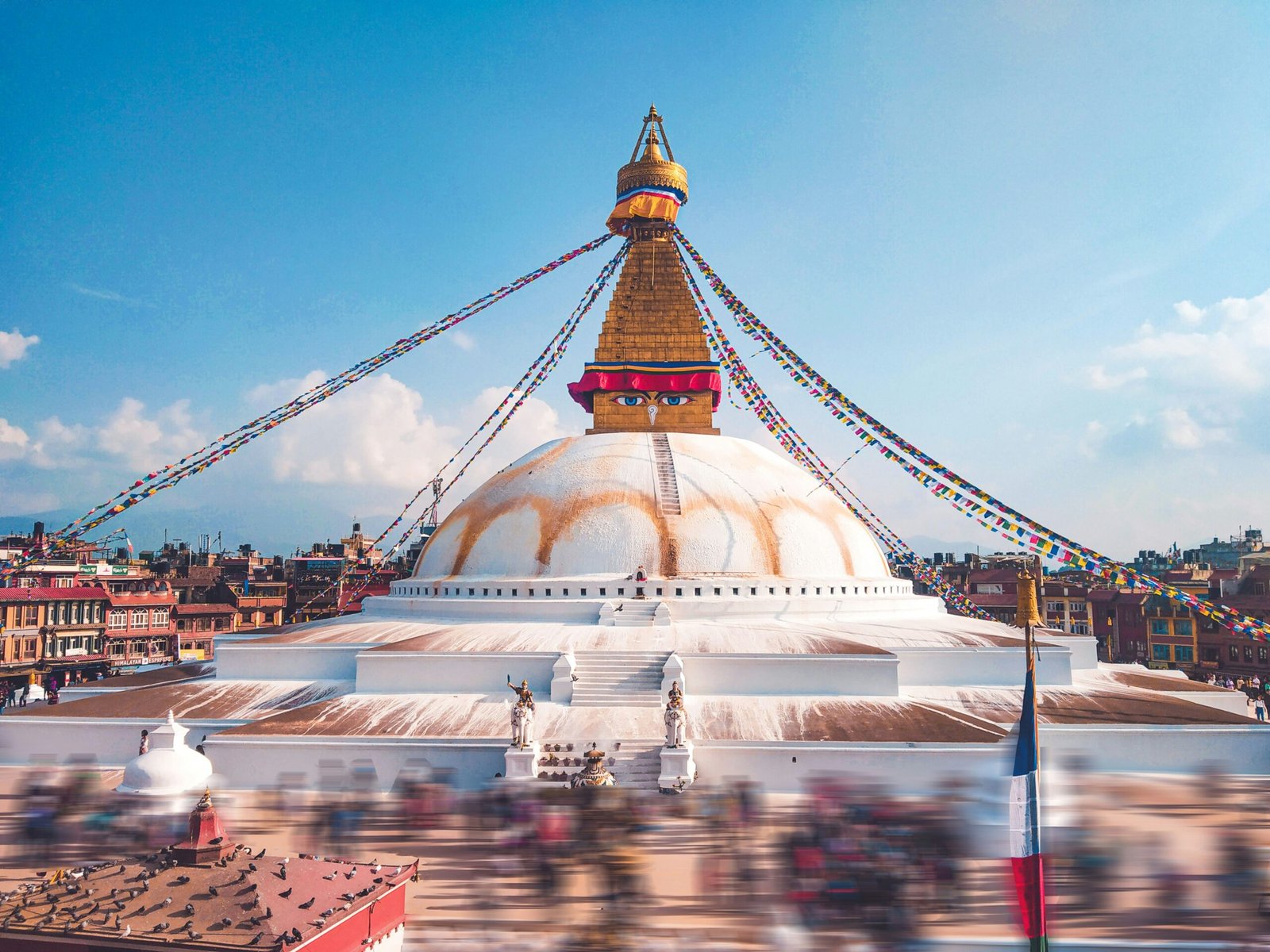
Boudhanath Stupa — one of the largest stupas in the world. A massive white dome topped with the Buddha’s all-seeing eyes, ringed by a circular pedestrian path where Tibetan monks in maroon robes walk the ritual circumambulation alongside tourists and Kathmandu residents. Genuinely peaceful in a city that rarely is. Around 30 minutes by taxi from Thamel.
Durbar Square — ten minutes’ walk from the Aloft. The old royal palace complex — temples, courtyards, carved wooden windows — is a living museum, not preserved behind glass but actively used. Sadhus sit in temple doorways, women sell marigolds on the steps, pigeons own the rooftops. Go late afternoon for the best light.
Early dinner and an early night. The first day in Kathmandu burns energy faster than it looks.
Day Two — Logistics and Final Preparation
Day two is your logistics day. Don’t leave any of this to the last minute.
Sagarmatha National Park permit — if your operator isn’t handling this, visit the Nepal Tourism Board office in Bhrikutimandap. Bring passport photos and cash. It takes roughly 30 minutes and costs NPR 3,000. Full details in the Nepal Trekking Permits guide. With Evertrek, permits are arranged for you — confirm this in the pre-trek briefing.
Gear check and final purchases — Thamel is lined with trekking gear shops selling everything from genuine brand-name equipment to convincing knockoffs at a fraction of the price. If you’ve forgotten something, this is where to find it. One firm rule: do not buy new boots in Kathmandu. Boots need breaking in. Buying fresh boots two days before a three-week trek is how you end up with blisters that define the entire experience.
Currency for the trail — exchange USD into NPR before you leave Kathmandu. The trail has very limited exchange facilities and teahouses increasingly prefer local currency. A Wise card is the most efficient way to manage multiple currencies — you can load it in NPR before departure and avoid carrying large amounts of cash.
Evertrek pre-trek briefing — this typically happens on day two. Your guide runs through the day-by-day plan, permits are distributed, gear is checked, and you can ask every question you have before you’re standing at 4,000m with no mobile signal. Don’t miss it and don’t rush it.
Swayambhunath (Monkey Temple) — if you have afternoon energy, the hilltop Buddhist complex west of Thamel is worth the visit. The climb up the steps is modest, the view over the Kathmandu Valley from the top is not. Named for the rhesus macaques that inhabit the complex and have absolutely no interest in your personal space.
A good dinner and an early night. Your Ramechhap vehicle leaves Thamel at roughly 1–2am. Set multiple alarms. The drive is four to five hours on winding mountain roads and you want to be at Manthali Airport early enough to check in without rushing. Getting into bed by 8pm knowing you’re back up at midnight is the right approach — even if you don’t sleep much, rest is better than nothing.
The Midnight Transfer
This is the part most EBC planning articles gloss over. Your trek doesn’t begin when you board the Lukla flight — it begins when you’re in a minibus at 1am navigating out of Kathmandu in the dark. It’s a part of the experience, it’s not glamorous, and the only way through it is to be prepared.
Pack your daypack the night before so you’re not rummaging for headtorch batteries at midnight. Have your jacket accessible — the drive is cold at that hour. Sleep in the vehicle if you can.
The Lukla flight itself takes roughly 20–25 minutes from Ramechhap and is spectacular on a clear morning. Sit on the left side of the plane for the best mountain views. The approach to Tenzing-Hillary Airport is something you’ll remember for a long time.
Full details on the Ramechhap logistics are in the Flying to Lukla guide.
Post-Trek Kathmandu — A Different Experience
Coming back to Kathmandu after three weeks on the trail is a peculiar feeling. Hot showers, cold beer, restaurant menus with more than four items, streets that feel unbearably loud — all of it simultaneously overwhelming and deeply welcome.
The Aloft Thamel will feel like the most comfortable hotel you’ve ever stayed in. It won’t be — it’s a good mid-range hotel — but perspective is everything after three weeks in teahouses.
Post-trek priorities are different. The Garden of Dreams — hidden behind a wall on the edge of Thamel — is restored to improbable beauty amidst the chaos of central Kathmandu. Fountains, pavilions, pergolas, and manicured lawns. The noise disappears entirely behind the garden walls. It’s the place to come when you have been walking for three weeks and want to sit with a book and nothing else. Around 200 rupees entry.
Patan (Lalitpur) for the afternoon — 30 minutes from Thamel, significantly calmer, and the Durbar Square there is arguably more beautiful than Kathmandu’s. Excellent craft shops and cafés. A good use of post-trek time that doesn’t require the energy reserves you no longer have.
And one more plate of momos. By now you have opinions about them.
Practical Notes
Getting around: Rickshaws, taxis, and the Pathao ride-share app all work. Agree on a taxi price before you get in — meters are rarely used.
Food and water: Drink only bottled or filtered water throughout your stay. Don’t brush your teeth with tap water. Your gut needs to arrive on the trail in good shape.
Luggage storage: The Aloft and Evertrek’s office both offer luggage storage — leave anything you don’t need on the trail (city clothes, extra gear, anything you’ve over-packed) before the Ramechhap transfer.
Booking.com is worth using to compare Thamel hotel rates if you’re extending your stay beyond what your operator covers — the Aloft comes up well in search and the surrounding options are clear.
More EBC Planning Guides
- Nepal Visa Guide for EBC Trekkers
- Nepal Trekking Permits — What You Actually Need
- Flying to Lukla — The Ramechhap Guide
- What to Eat on the EBC Trek
- EBC Trek Guide for Non-Mountaineers
Andrew Dillon is a data consultant, runner, and triathlete based in Auckland, New Zealand. He is trekking EBC via Gokyo with Evertrek in October 2026. Follow his journey at abovethecloudtreks.com.