Gokyo Lakes — The Hidden Highlight of the EBC Gokyo Route
This article contains affiliate links. If you book or purchase through these links I may earn a small commission at no extra cost to you. I only recommend products and companies I genuinely use or have researched thoroughly.
Most people who trek to Everest Base Camp go via the classic route — up the Khumbu Valley, through Namche Bazaar, Tengboche, Dingboche, and on to Lobuche and Gorak Shep. It’s spectacular, well-trodden, and for good reason one of the most celebrated treks in the world.
But there’s another way. The Gokyo Valley route branches left at Namche and climbs through a quieter, less-visited landscape to a chain of five glacial lakes at over 4,700 metres — the Gokyo Lakes. It then crests Gokyo Ri for what many experienced trekkers consider a better view than Kala Patthar, before crossing the Cho La Pass to join the classic trail at Lobuche.
We chose this route. Here’s why the Gokyo Lakes are worth it.
What Are the Gokyo Lakes?
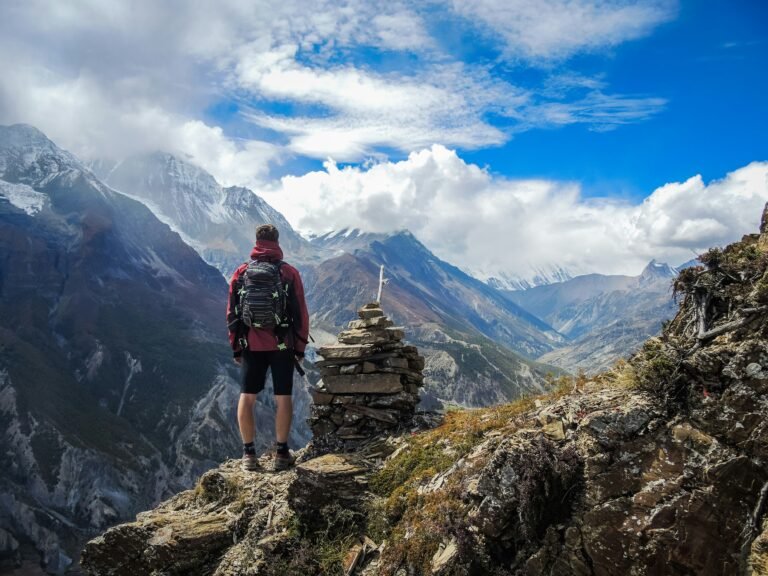
The Gokyo Lakes variation of the classic EBC trail adds an ascent of Gokyo Ri, the Cho La Pass, and five glacial lakes to the itinerary.
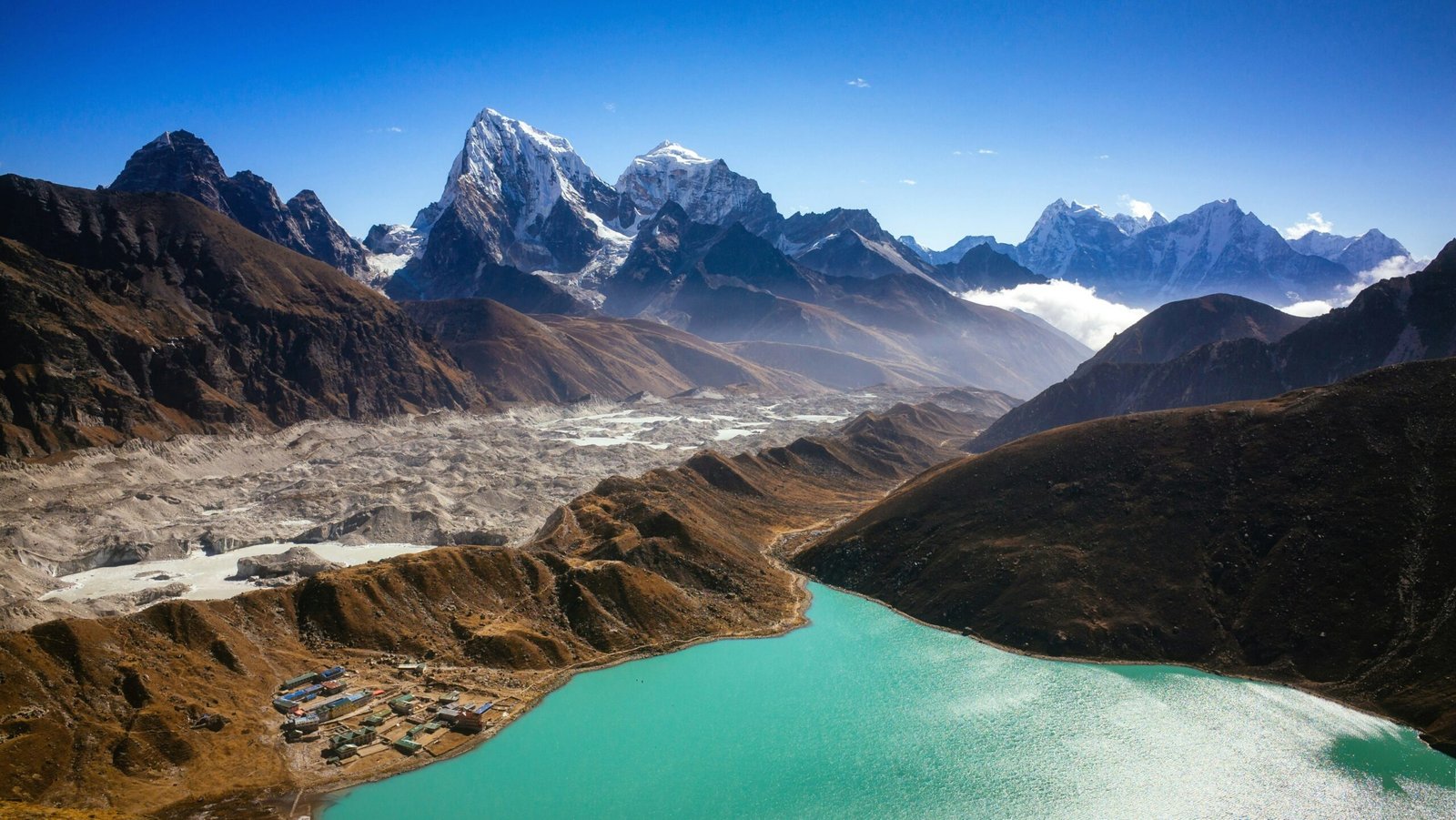
The five lakes sit at progressively higher altitudes as you move up the valley, each one a different shade of blue-green depending on the light and the season. The third lake, Dudh Pokhari, is the centrepiece — at 4,700 metres, the sheer stillness of the water is something no camera can fully capture. The village of Gokyo sits on its western shore and serves as the base for the Gokyo Ri climb.
You’ll walk along the Ngozumpa Glacier — the longest glacier in Nepal — as you move between lakes. The scale of it is difficult to convey from photographs. The glacier stretches for kilometres, its grey moraine contrasting with the turquoise of the lakes beside it. It’s a landscape unlike anything on the classic EBC route.
Gokyo Ri — The Views Case
The honest question when planning a Gokyo route is whether Gokyo Ri genuinely betters Kala Patthar, the classic EBC viewpoint. The answer is personal — but the case for Gokyo Ri is strong.
From Gokyo Ri at 5,357m you’ll see four 8,000-metre peaks simultaneously — Everest, Lhotse, Makalu, and Cho Oyu. The turquoise lakes below and the white expanse of the Ngozumpa Glacier stretching northward create one of the Himalaya’s most photographed scenes.
Kala Patthar gives you a closer, more direct view of Everest. Gokyo Ri gives you the lakes in the foreground and four eight-thousanders in one frame. For photography particularly, the Gokyo Ri composition is extraordinary — the Sony A6700 and Tamron 70-300mm combination is going to get a serious workout on this day.
At the summit of Gokyo Ri, you won’t be jostling with a hundred other people for a photo. It’s a place for quiet reflection, where the only sound is the flapping of prayer flags and the distant crackle of the Ngozumpa Glacier. The classic EBC trail during October peak season is busy. The Gokyo Valley significantly less so.
The Climb to Gokyo Ri
The hike to the top of Gokyo Ri usually begins at 4:00am. Early for the same reason as the Cho La Pass — you want to be at the summit for sunrise before the clouds build.
The bouldery ascent to Gokyo Ri is a rigorous test of stamina. The trail is steep and can be particularly challenging in adverse weather conditions. From the village of Gokyo the climb gains roughly 600 metres over approximately 2-3 hours. It’s not technical — no glacier, no exposed ridge — but at 5,357m with a 4am start and several days of accumulated altitude fatigue, it demands everything you have.
Hiking to Gokyo Ri the day before the Cho La Pass crossing primes your lungs for the altitude without the weight of a full pack. On the Evertrek itinerary this is exactly how it’s sequenced — Gokyo Ri one day, Cho La Pass the next. Two of the hardest days of the trek back to back, but each one preparing you for the other.
Getting to Gokyo — The Route from Namche
Where the trail splits toward Everest Base Camp at Namche, you turn left. The landscape shifts from lush rhododendron forests to alpine scrub and eventually to the stark, beautiful moraine of the glacier. The stops at Dole and Machhermo serve as the gateway to the high lakes — the air gets thinner here, and the views of Thamserku and Kantega become your constant companions.
The Gokyo Valley route from Namche takes roughly 3-4 days to reach Gokyo village depending on your itinerary. It’s a quieter path than the main EBC trail — fewer teahouses, smaller groups, more genuine remoteness. The Gokyo route is a less crowded and more relaxed trekking experience compared to the busy paths of the EBC trek — worth considering for those who want to enjoy the beauty of nature without having to navigate crowds.
Passing the first lake (Longponga) and second lake (Taboche Tsho) before reaching Gokyo is a memorable approach — the lakes appear one by one as the valley opens up above the treeline.
October at the Lakes — What to Expect
October is prime season for the Gokyo Valley. The monsoon has cleared, the skies are typically sharp and blue, and the views are at their best. Temperatures at Gokyo village (4,790m) drop below freezing overnight — bring your sleeping bag liner and merino layers for the hut evenings.
The lakes themselves are less likely to be frozen in early-to-mid October than later in the season, meaning the full turquoise colour is visible. By late October there’s a chance of ice on the upper lakes and snow on the surrounding peaks — beautiful for photography but worth being prepared for.
Gokyo village has several teahouses. The Gokyo region continues to maintain its rugged charm in 2026 while offering improved lodge facilities and more sustainable trekking practices. Facilities are simpler than Namche Bazaar — charging electronics costs extra, hot showers may not be available. The remoteness is part of the point.
Gokyo Ri vs Kala Patthar — Which Is Better?
This comes up on every EBC planning forum and the answer is genuinely — it depends what you’re there for.
| Gokyo Ri | Kala Patthar | |
|---|---|---|
| Altitude | 5,357m | 5,545m |
| Peaks visible | Everest, Lhotse, Makalu, Cho Oyu | Everest, Lhotse, Nuptse |
| Foreground | Turquoise lakes + glacier | Khumbu glacier |
| Crowds | Light | Busy in peak season |
| Difficulty | Steep but non-technical | Steep but non-technical |
| Photography | Outstanding — four peaks + lakes | Outstanding — closer Everest |
Gokyo Ri at 5,357m is slightly lower than Kala Patthar at 5,545m, but the Gokyo route involves more glacier walking. If you add the Cho La Pass, the combined trek becomes significantly harder than EBC alone — and significantly more rewarding.
We’re doing both — Gokyo Ri then the Cho La Pass then Kala Patthar. It’s the most complete version of the Everest region and exactly why the Evertrek 18-day itinerary appealed to us. If you’re considering the same route, readers get £200 off via our Evertrek referral link.
The Honest Summary
The Gokyo Lakes are the reason many trekkers say the Gokyo route is the better version of EBC. Five high-altitude glacial lakes, a quieter trail, a summit viewpoint with four eight-thousanders in one frame, and the Cho La Pass crossing to follow. It adds days and difficulty to the itinerary, and every one of those days is worth it.
We’re going in October 2026 and the Gokyo section is the part of the trip I’m most looking forward to. I’ll update this article with first-hand experience when we’re back.
More EBC Planning Guides
- Cho La Pass — What to Expect
- EBC Trek Guide for Non-Mountaineers
- How Difficult is the EBC Trek?
- Altitude Sickness on the EBC Trek
- Guided vs Independent EBC Trek
Andrew Dillon is a data consultant, runner, and triathlete based in Auckland, New Zealand. He is trekking EBC via Gokyo with Evertrek in October 2026. Follow his journey at abovethecloudtreks.com.