Sleeping Bag for the EBC Trek — Hire vs Buy, and Why We Chose the Rab Ascent Pro 800
This article contains affiliate links. If you book or purchase through these links I may earn a small commission at no extra cost to you. I only recommend products and companies I genuinely use or have researched thoroughly.
The sleeping bag for the EBC trek decision was one I sat on longer than almost anything else in our preparation. It sounds straightforward — pick a bag, pack it, go. But once you start pulling on the threads, it gets complicated fast.
Hire or buy? What temperature rating do you actually need? What do the temperature ratings even mean? Does your operator include a bag? What do the teahouse conditions actually feel like at 5,000 metres? And if you’re going to spend serious money on a bag, which one?
This is the honest version of how we worked through it — including the decision to buy rather than hire, and why we landed on the Rab Ascent Pro 800.
Step One — Hire or Buy?
The first question most people ask is whether it’s worth buying a sleeping bag for EBC at all. Operator hire is available, Kathmandu rental shops stock EBC-grade bags, and a quality four-season down bag isn’t cheap.
Here’s how we thought about it:
The case for hiring:
- Lower upfront cost — rental bags in Kathmandu typically run USD $1–2 per day
- No luggage weight from home
- Evertrek offer sleeping bag hire as part of their kit options
The case for buying:
- You own it — useful for future trips, camping, and Great Walks
- Hygiene — rental bags have been used by many trekkers before you
- Fit — a bag sized and chosen for you specifically sleeps warmer than a generic rental
- Quality — rental bags are often older stock with compressed down that doesn’t perform to its original rating
For us the decision came down to three things. First, we’d already completed the Kepler Track and have more multi-day trips planned — a quality sleeping bag is a long-term asset, not a single-use purchase. Second, the hygiene point matters more at altitude where your immune system is already under stress. Third, we caught a long weekend sale in New Zealand and got the Rab Ascent Pro 800 for around NZD $500 each — nearly half the RRP. At that price, owning beats hiring over any multi-year horizon.
If you’re doing one trek and unlikely to camp again, hire makes sense. If you’re a regular hiker or this is the start of bigger trips, buy.
Step Two — What Temperature Rating Do You Actually Need?
This is where most guides give vague answers. “Get a four-season bag” doesn’t help when you’re standing in a gear shop looking at ratings from -5°C to -40°C.
The honest answer for EBC:
Teahouse temperatures at altitude vary significantly. Temperatures at Gorak Shep (5,140 metres) regularly drop below -10°C at night. Teahouses are not heated — you sleep in your bag, often in your base layers, with the bag liner adding warmth.
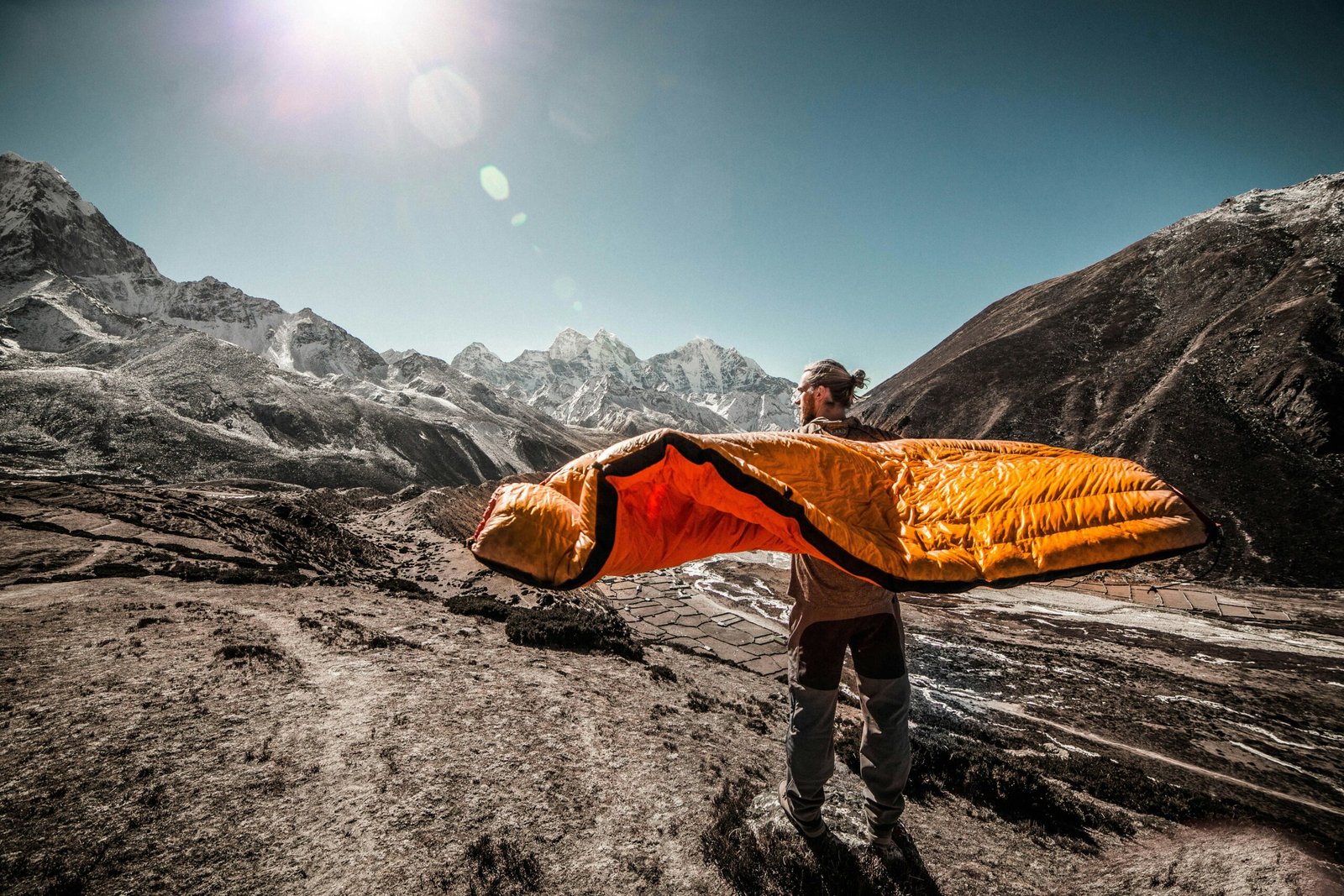
The standard guidance is a bag rated to at least -10°C comfort rating (not limit rating — these are different). The Rab Ascent Pro 800 is filled with 800g of 650FP hydrophobic duck down, with a Pertex Quantum Pro outer that is wind and water resistant — making it well-suited to the damp teahouse conditions you’ll encounter at altitude.
Comfort vs limit rating — understand this distinction: Most sleeping bags quote both. The comfort rating is the temperature at which a standard adult female sleeps comfortably. The limit rating is lower — the temperature at which a standard adult male can sleep for eight hours without waking from cold. For EBC planning, use the comfort rating as your benchmark.
For the Gokyo route in October, we wanted a bag rated comfortably to -10°C or below, with headroom for the coldest nights near Base Camp and on the Cho La Pass approach.
Why We Chose the Rab Ascent Pro 800
We looked at several options before landing on the Rab. Here’s the shortlist and why the Ascent Pro won:
The contenders:
Western Mountaineering, Cumulus, and PHD make excellent bags at the top end — but prices pushed well above NZD $1,000 and for a first EBC trip that felt like overkill. Mountain Hardwear and Marmot produce solid mid-range options. But Rab kept coming back in recommendations specifically for EBC — partly for the spec, partly for the Pertex Quantum Pro outer.
What sold us on the Rab Ascent Pro 800:
The Ascent Pro 800 is built with Pertex Quantum Pro wind and water resistant outer and hydrophobic duck down — it copes well with wind, condensation, and damp conditions, ideal for conditions where moisture management matters. Teahouses at altitude have condensation issues. A bag with a water-resistant outer is meaningfully better in those conditions than one without.
The wide mummy fit gives space to wear extra, bulkier layers inside if using in seriously cold temperatures — so you can sleep in your merino base layers for extra warmth on the coldest nights without the bag feeling claustrophobic.
The trapezoidal boxwall baffle construction with differential cut eliminates cold spots — the down stays where it should rather than migrating to the bottom of the bag overnight. This matters more than fill power in real-world use.
The draught collar and fitted hood are properly engineered — small details that make a significant difference when you’re losing heat from your neck and head at altitude.
Finally, this bag was available in both a standard and a long size. The standard bag had a maximum height of 185cm. Given I am 183cm (6ft), this was a little tight so being able to ‘size up’ for the same price was great.
One thing to note: The Ascent Pro 800 is specifically noted by EBC trekkers who’ve used it at Gorak Shep and on similar high-altitude routes. Finding a bag with a real-world EBC track record rather than just a temperature rating on paper was part of our research.
We paired it with the Sea to Summit silk liner — already in our kit. A liner adds approximately 5°C of warmth and keeps the bag cleaner across 18 days of teahouse use. If you’re buying a quality bag, a liner is a low-cost way to extend its usable temperature range significantly.
The NZD $500 Sale — When to Buy
We paid around NZD $500 each for the Rab Ascent Pro 800 during a long weekend sale in New Zealand — close to half the regular RRP. Sleeping bags from premium brands go on sale reliably around public holidays and end of season — worth waiting for if your timeline allows.
If you’re based in the UK, Cotswolds Outdoor, Ellis Brigham, and Rab directly run regular sales. In NZ and Australia, Macpac, Bivouac, and Torpedo7 are the places to watch. Sign up for email alerts from two or three retailers a few months before you need to buy — the sale will come.
The Rab Ascent Pro 800 is available on Amazon if you need it quickly — link below. But if you have time, a sale price makes the buy vs hire calculation even more straightforward.
The Honest Summary – Sleeping Bag for the EBC Trek
For EBC in October, you need a bag rated comfortably to -10°C or below. Hire is fine for one-off trekkers — but if you’re a regular hiker, buying is better value over time, better for hygiene, and you get a bag fitted to you.
We chose the Rab Ascent Pro 800 for the Pertex Quantum Pro outer, the wide mummy fit, the boxwall baffles, and its proven track record at EBC altitude specifically. At sale price it was an easy call. At full RRP it’s still a strong option at the quality-to-price point for EBC — it’s not the lightest bag on the market, but it’s built for exactly the conditions you’ll face.
Paired with a silk liner and merino base layers, it should handle everything from Namche Bazaar to Gorak Shep comfortably.
Gear Mentioned in This Article
- Rab Ascent Pro 800 — View on Amazon here
- Sea to Summit Silk Sleeping Bag Liner — View on Amazon here
More EBC Planning Guides
- The Honest EBC Packing List
- How to Train for Everest Base Camp
- Altitude Sickness on the EBC Trek
- Everest Base Camp Cost — Full Budget Breakdown
- EBC Trek Guide for Non-Mountaineers
Andrew Dillon is a data consultant, runner, and triathlete based in Auckland, New Zealand. He is trekking EBC via Gokyo with Evertrek in October 2026. Follow his journey at abovethecloudtreks.com.