Everest Base Camp Trek Guide for Non-Mountaineers (2026)
This article contains affiliate links. If you book or purchase through these links I may earn a small commission at no extra cost to you. I only recommend products and companies I genuinely use or have researched thoroughly.
I’ve spent years hiking Scotland’s Munro’s in all weathers and exploring New Zealand’s beautiful track network. Puffing up the never ending ascent of Ben Nevis, frozen solid on the Lomond ranges, navigating in near-zero visibility on the Kepler Track. I love the mountains deeply — but I’ve never considered myself a mountaineer. Ropes, crampons, technical climbing — that’s never been my world. When the risk starts to feel real, I tend to step back.
So when the opportunity arose to tackle Everest Base Camp (EBC) with close family, my first reaction was equal parts excitement and quiet terror. A first experience of adventure tourism!
Could someone like me — a hiker, a runner, an occasional triathlete, but emphatically not a climber — actually stand at the foot of the world’s highest mountain?
The short answer, I discovered, is yes. And that’s what this guide is for.
I’m Andrew Dillon. I’m based in New Zealand, I run, cycle, and have done a few triathlons. Earlier this year (April 2026) we completed the Kepler Track Great Walk in conditions that hit -10°C wind chill. EBC is on my bucket list for October 2026, booked with Evertrek via the Gokyo Valley route. I’m writing this guide as I prepare — honestly, nervously, and with as much useful detail as I can muster for anyone in the same position.
What Exactly Is the Everest Base Camp Trek?
EBC sits at 5,364m (17,598ft) at the foot of the world’s highest mountain in Nepal’s Khumbu region. It’s the staging point used by mountaineers attempting Everest’s summit — but you don’t need to be a mountaineer to get there.
The trek is a hiking route. A long, high, physically demanding hiking route — but hiking nonetheless. No technical climbing, no ropes, no ice axes required for the standard trail.
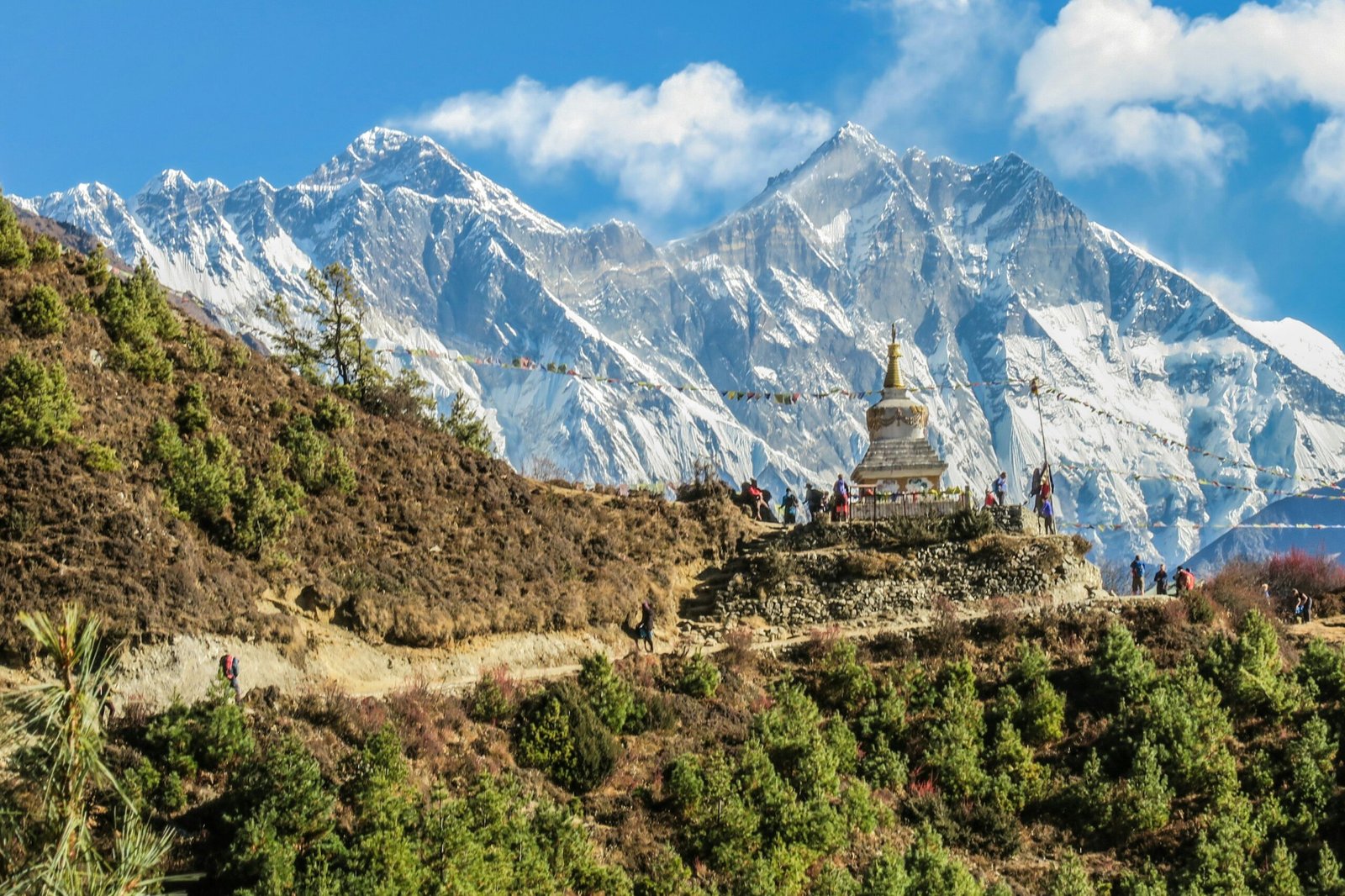
Most trekkers fly into Lukla from Kathmandu (or increasingly from Ramechhap Airport), then spend 14-18 days walking through the Khumbu Valley, passing through Sherpa villages, crossing suspension bridges, and gradually climbing through teahouse lodges to Base Camp itself.
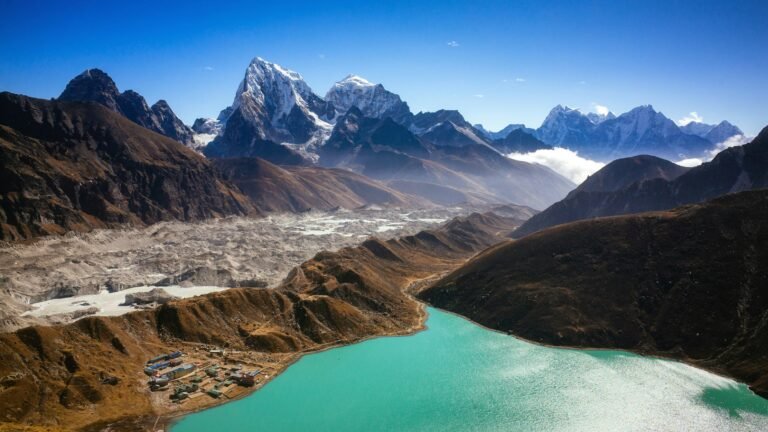
The route I’m taking — via Gokyo Valley and the Cho La Pass — is a more remote and rewarding variation that adds Gokyo Lakes and Gokyo Ri to the journey before crossing to the classic EBC trail.
How Hard Is It — Really?
This is the question every prospective trekker asks, and deserves an honest answer rather than either panic or false reassurance.
The physical demand is significant but achievable for most people with a reasonable fitness base. You’ll be walking 5-8 hours a day over rugged Himalayan terrain. Some days involve steep ascents and descents. Others are shorter acclimatisation days. The Gokyo route adds the Cho La Pass at 5,420m — icy and rocky, requiring care, but not technical mountaineering.
Evertrek, who operate this trip, rate it as “Challenging” — their second highest difficulty rating. That’s honest. But they also note that with a few months of consistent training, most active hikers can complete it.
If you can hike for 4-6 hours carrying a 6-8kg daypack, climb 500-800m of elevation in a day, and sustain that across consecutive days without needing complete rest days — you’re in the right ballpark physically.
As a runner and triathlete with a hiking background, I’m using my existing training base and adding longer hill walks and stair sessions with a weighted pack to prepare.
The real challenge isn’t fitness. It’s altitude.
Altitude Sickness — The Honest Truth
I’ll be honest: altitude is my biggest fear going into this trek. And I think that’s the right thing to be cautious about.
Unlike cold or physical fitness, altitude sickness doesn’t care how fit you are. Elite athletes get it. Sedentary people sometimes sail through. Your body’s ability to acclimatise is partly genetic, partly about how carefully you ascend, and partly luck.
At EBC (5,364m) and Kala Patthar (5,550m), the oxygen level is roughly half what it is at sea level. Simple tasks feel strenuous. Your body needs time — real time — to adjust.
The symptoms to watch for:
- Headache (the most common early sign)
- Nausea and loss of appetite
- Dizziness
- Shortness of breath beyond what exertion explains
- Poor sleep
The golden rule is “trek high, sleep low” — ascend during the day, descend to sleep at lower altitude where possible. The EBC itinerary with Evertrek builds in acclimatisation days at Namche Bazaar (3,440m) and Gokyo (4,790m) precisely for this reason. These aren’t rest days — staying gently active actually helps your body adapt. They’re essential.
Diamox (Acetazolamide) is worth discussing with your GP before the trip. Many EBC trekkers use it as a preventative medication. It doesn’t eliminate altitude sickness risk but can reduce it. I’m having that conversation before I go.
The most important thing: communicate with your guide immediately if you feel unwell. Evertrek guides carry oximeters and heart rate monitors and have extensive experience with altitude. Descending even 300-500m can provide significant relief quickly. The guides know this and will act accordingly.
Altitude is serious, but it is manageable with a well-designed itinerary, honest self-monitoring, and good guides. That’s why choosing a reputable company matters.
We will be trying out altitude training before we go, which involves simulating altitude using a machine and a mask. I will let you know how that works later, and whether I find it useful or not. You can find a more substantial guide to altitude sickness here.
The Cold — What to Actually Expect
My second biggest concern. And having done the Kepler Track in -10°C wind chill conditions, I thought I had a reasonable frame of reference. EBC will be colder still.
The trek takes place across a wide altitude range, which means temperatures vary dramatically:
- Lower elevations (Lukla, Phakding): 10-15°C during the day, cooler at night
- Namche Bazaar: Can drop below freezing at night
- Higher elevations (Lobuche, Gorak Shep, Base Camp): Daytime temperatures near or below freezing; nights significantly colder
The key to managing cold on EBC isn’t one heavy jacket — it’s a layering system that adapts to conditions that can swing from surprisingly pleasant in morning sun to bitterly cold in afternoon wind within hours.
Your core layering system:
- Base layer: Merino wool or synthetic moisture-wicking long sleeve (Helly Hansen Lifa Merino Midweight is recommended by Evertrek)
- Mid layer: Fleece or light insulated jacket
- Outer layer: Waterproof, windproof shell (GORE-TEX or equivalent)
- Insulated jacket: Down or synthetic for evenings and high altitude (Montane Anti-Freeze XT Down Hoodie is a popular choice)
Evertrek include free hire of a down jacket and winter sleeping bag for all trekkers — worth knowing if you don’t want to invest in those items before the trip.
Don’t underestimate extremities. Warm gloves, liner gloves underneath, a good hat, and wool or synthetic socks are non-negotiables. Hand and foot warmers are worth packing for the coldest nights at Gorak Shep and Base Camp.
The Route — Classic EBC vs Gokyo
Most EBC content focuses on the classic route: Lukla → Namche → Tengboche → Dingboche → Lobuche → Gorak Shep → Base Camp.
I’m taking the Gokyo Valley variant, which branches off the classic trail at Namche and heads northwest through a more remote, less-trafficked valley before crossing the Cho La Pass to rejoin the classic route.
Why Gokyo?
- The turquoise Gokyo Lakes at 4,750m are genuinely spectacular — a different visual experience to the classic route
- Gokyo Ri (5,483m) offers what many consider the finest panoramic view of Everest and Cho Oyu — potentially better than the view from Base Camp itself
- Fewer trekkers means more solitude and a more authentic feel in the teahouses
- Crossing the Cho La Pass (5,420m) adds adventure and a genuine sense of achievement
- You still reach Base Camp and climb Kala Patthar — you get everything the classic route offers plus more
The trade-off is the Cho La Pass itself — icy, rocky, and requiring crampons on the descent. It’s the one section of the route that feels closest to technical terrain. But Evertrek guides lead you through it, and it’s manageable for any fit, careful trekker.
Essential Gear
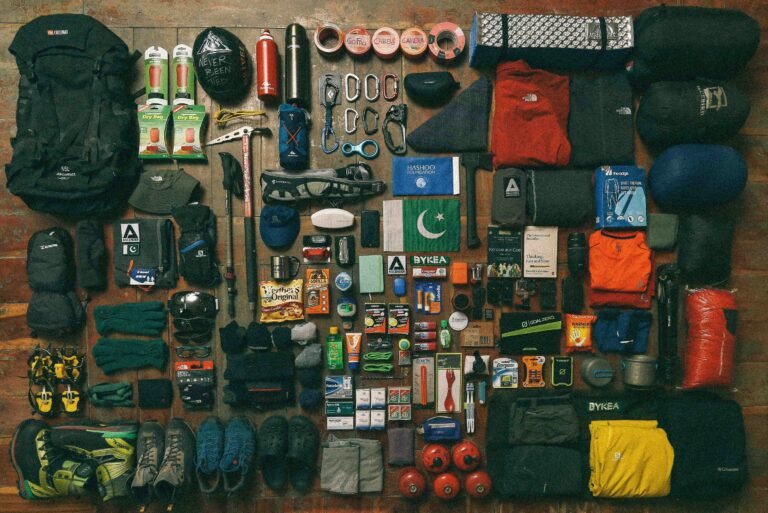
You don’t need to spend a fortune, but you do need the right kit. Based on the Evertrek gear list and my own research, here’s what matters most:
Footwear — the most important decision
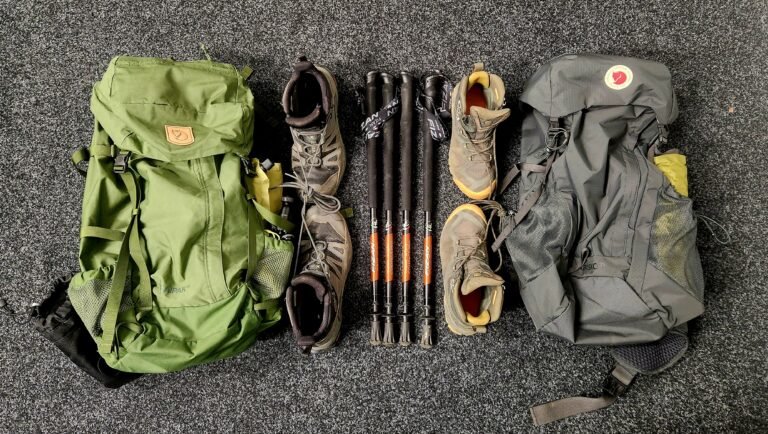
Waterproof, supportive, broken-in hiking boots are essential. The Salomon Quest 4 GTX boots are widely recommended for EBC — grippy, supportive, and proven in demanding conditions. Whatever you choose, wear them for many weeks before the trek. Blisters at altitude are miserable.
Trekking poles
Non-negotiable. They reduce knee strain on steep descents (which there are many of) and help with stability on uneven terrain. The Leki Khumbu Lite poles are a popular choice and appropriately named for this trek.
Daypack
You’ll carry a 30-35L daypack daily — your porters carry your main duffel. The Osprey Talon 33 is a well-regarded option that balances load well without killing your back.
Sleeping bag
Evertrek provide free hire of a winter sleeping bag, but if you prefer your own, something rated to -20°C is recommended for the higher nights. The Rab Ascent 700 is a solid choice.
The 15kg baggage limit
Worth knowing: the domestic flight to Lukla has a 15kg combined limit for your duffel and daypack. Pack smart, and consider buying heavier consumables like snacks in Kathmandu or Lukla rather than carrying them from home.
See a full packing list guide here.
What’s Included with a Guided Trek (Using Evertrek as an Example)
Going with a reputable guiding company changes the logistics picture significantly. With Evertrek, the following is included:
- All accommodation throughout (5-star hotel in Kathmandu, teahouses on trek)
- All meals during the trek
- Expert first aid-trained guides and porters
- All trekking permits – see details about these here
- Private airport transfers
- Filtered water on the majority of the trek (reducing plastic waste significantly)
- Oximeter and heart rate monitor carried by guides
- Free 80L EverTrek duffel bag, t-shirt, cap and map
- Free hire of down jacket and winter sleeping bag (on request)
- Welcome and farewell dinners
What’s not included:
- Internal flights to Lukla (approximately $450, handled by Evertrek’s local partners) – a detailed post about this here
- International flights
- Travel insurance (essential — make sure yours covers high altitude trekking and emergency evacuation)
- Visa fees – a detailed post here
- Tips for guides and porters (budget approximately 10% of trek cost — around £250 for a £2,500 trek)
- Personal spending money (Evertrek recommend £20-£45 per day for showers, wifi, snacks, souvenirs)
Food and Accommodation — Managing Expectations
Accommodation on the trail means teahouses — simple, family-run lodges that are genuinely cosy and full of character. Twin-sharing rooms with basic beds. Communal bathrooms are the norm at most stops. Hot showers are available at lower altitudes for a small fee (£3-5), less common higher up — wet wipes become your friend above Namche.
Electricity for charging devices is available but not free, not guaranteed, and gets pricier as you ascend. Bring a power bank. WiFi exists in some teahouses but is slow and paid.
Before and after the trek, Evertrek put you up at the 5-star Hotel Aloft in Kathmandu — a very welcome contrast.
Food is better than you’d expect. Teahouses serve a mix of local and Western dishes. Dal Bhat (rice, lentil soup, vegetables) is the trekker’s staple and comes with unlimited refills — ideal for the calories you’re burning. Veggie Momos (dumplings), garlic soup (also believed to help with acclimatisation), Sherpa stew, and surprisingly decent pasta and pizza are all on the menu. Evertrek advise sticking to vegetarian food above base camp villages — meat at altitude carries a higher food poisoning risk.
The Itinerary at a Glance
The Evertrek EBC via Gokyo trip runs over 18 days including travel:
| Day | Route | Altitude |
|---|---|---|
| 1-2 | Kathmandu sightseeing & transfer | 1,300m |
| 3 | Fly to Lukla, trek to Phakding | 2,652m |
| 4 | Phakding to Namche Bazaar | 3,440m |
| 5 | Namche acclimatisation | 3,440m |
| 6 | Namche to Dhole | 4,200m |
| 7 | Dhole to Macchermo | 4,470m |
| 8 | Macchermo to Gokyo | 4,790m |
| 9 | Gokyo Ri acclimatisation | 5,483m |
| 10 | Gokyo to Dragnag (glacier crossing) | 4,790m |
| 11 | Cho La Pass to Dzongla | 5,420m |
| 12 | Dzongla to Lobuche | 4,910m |
| 13 | Lobuche to Gorak Shep — EBC | 5,364m |
| 14 | Kala Patthar sunrise, descend to Pheriche | 5,550m |
| 15-16 | Descent to Lukla | 2,652m |
| 17-18 | Fly to Kathmandu, departure | 1,300m |
Frequently Asked Questions
Do I need mountaineering experience?
No. EBC is a hiking trek, not a technical climb. You need good fitness, appropriate gear, and respect for altitude — not climbing experience.
How fit do I need to be?
You should be able to hike 4-6 hours a day carrying a 6-8kg pack, across multiple consecutive days. Evertrek recommend training 4-5 times per week for at least 3-4 months before the trek, focusing on cardio, leg strength, and long consecutive hikes.
What about the Cho La Pass — do I need crampons?
Microspikes or crampons are recommended for the Cho La Pass descent. Your guide will advise on conditions when you arrive in Kathmandu. You can hire these in Kathmandu or Namche Bazaar.
Is it safe?
Everest Base Camp is one of the world’s most popular high-altitude treks precisely because it is achievable for fit, prepared non-mountaineers. Going with a reputable company with experienced guides significantly reduces risk. Evertrek has a 95% trek success rate.
How much does EBC cost?
A guided EBC trek with a reputable UK company typically costs £2,500-£3,500 for the trek itself. Add international flights, travel insurance (budget more than you think — high altitude evacuation insurance is essential), internal flights (~$450), and personal spending money.
When is the best time to go?
Two main windows: pre-monsoon (February-May) and post-monsoon (September-December). Spring brings warmer temperatures and rhododendrons in bloom but busier trails. Autumn (October-November) offers crystal clear skies, stable weather, and fewer trekkers — widely considered the best overall window.
My Honest Take — Should You Do It?
I haven’t done it yet. I’ll update this guide with first-hand experience when I return in December 2026.
But here’s what my preparation has taught me: EBC is not for everyone, but it’s for far more people than think it is.
If you love the mountains, have a solid hiking base, are willing to train seriously for a few months, and can accept that altitude is genuinely unpredictable — this is one of the most achievable bucket-list adventures on earth.
The fear is part of it. I’m still nervous about altitude. I’m still slightly apprehensive about the cold above 5,000m. But the Munros taught me that mountains reward the prepared and the patient. I’m trusting that principle holds at 5,364 metres.
Watch this space.
What to Read Next — The Full EBC Planning Hub
This guide is the starting point, but planning an Everest Base Camp trek covers a lot of ground. Here’s everything I’ve written so far — honest, detailed, and based on my own preparation for October 2026.
The essentials:
How Difficult is the Everest Base Camp Trek? An Honest Assessment — The question everyone asks first. I cover altitude, daily distances, cumulative fatigue, and how the Gokyo route compares to the classic trail. Honest answer: harder than you think, more achievable than you fear.
Best Time to Trek Everest Base Camp — A Month by Month Guide — Not just “go in October or April.” I break down every month, including the shoulder seasons that most guides gloss over, so you can make the right call for your schedule.
Everest Base Camp Trek Cost — A Complete Budget Breakdown — What it actually costs, with real numbers. Operator fees, flights, insurance, visas, gear, tips and everything in between. No vague ranges.
Altitude Sickness on the EBC Trek — What is it, what does it feel like, how do you mitigate for it and what do in a worse case scenario. Everything you need to know about altitude sickness.
Flying to Lukla — The Ramechhap Guide — The flight route to Lukla that is now more common than not during peak seasons. This is what to expect.
Nepal Trekking Permits — Make sure you know what permits you need to get to Everest Base Camp, and what to check in with our guide about.
Nepal Visa Guide — What to expect when applying for your Nepal Visa, all in one place.
Planning and preparation:
How to Train for Everest Base Camp — A Triathlete’s Honest Guide — My actual training plan, built around the Kepler Track as a proving ground and Auckland Altitude Training Centre from June. Useful whether you’re a runner, a gym-goer, or starting from scratch.
The Honest EBC Packing List — What I’m Actually Taking — A work in progress, updated as decisions get made. Every item I own, every item I’m still agonising over, and the things most lists miss entirely.
Sleeping Bag for EBC — What to consider when choosing a sleeping bag for Everest Base Camp, and what we decided to go with.
Tech for the EBC Trek — My whole career has been related to technology, so of course I’m going to overthink tech is needed for Everest Base Camp.
The Gokyo route specifically:
Gokyo Lakes Guide — An overview of what we are expecting by walking through the Gyoko Lakes rather than taking the classic route.
Cho La Pass Guide — A spectacular pass, and another reason for choosing this trek. It adds another element of risk though.
Choosing an operator:
Honest EBC Trek Comparison — I’ve booked with Evertrek. Here’s how they compare to Intrepid Travel and G Adventures across route, price, group size, inclusions and support. Side-by-side and genuinely unbiased.
Guided vs Independent EBC Trek — Here is a look at the pro’s and con’s of guided vs unguided Everest Base Camp treks,
I’ll keep adding to this as new articles go live — permits, flying to Lukla, the trek diary itself, and eventually a full post-trek gear review. Bookmark this page or get in touch if there’s something specific you want me to cover.
Andrew Dillon is a data consultant, runner, and triathlete based in New Zealand. He is trekking to EBC via Gokyo with Evertrek in October 2026. Follow his journey at abovethecloudtreks.com
Thinking about booking EBC with Evertrek? As a current EverTrekker I can personally recommend them — and if you book using my referral link you’ll get £200 off and support this site at no extra cost to you. Check dates and prices here.